H-2B Temporary Non-Agricultural Worker Visa: 66,000 Cap and DOL Labor Certification
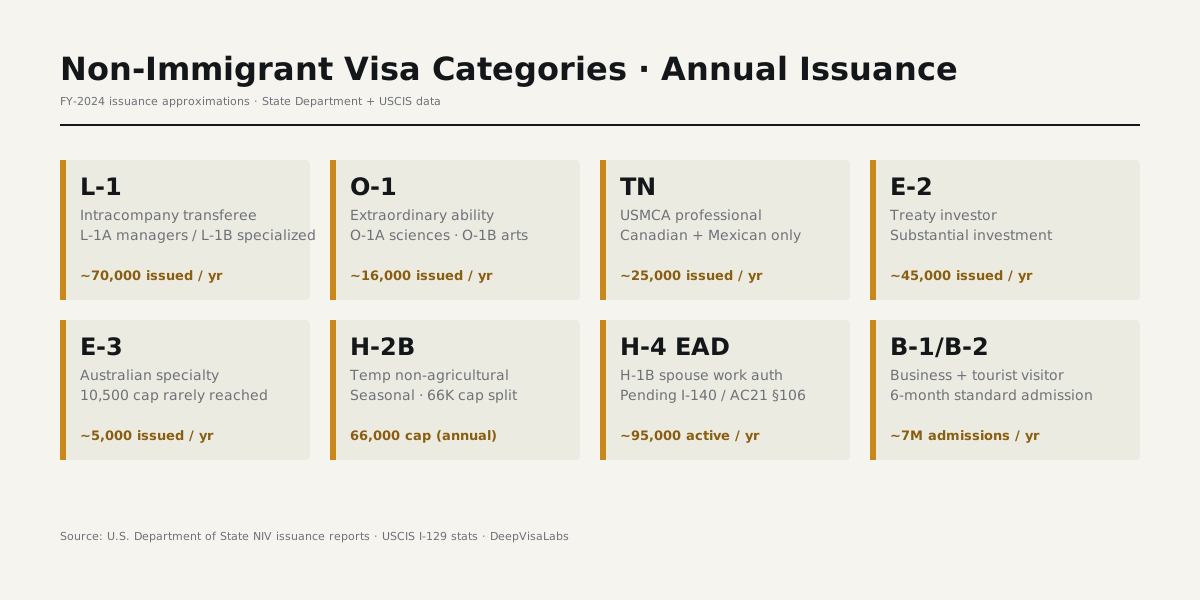
H-2B is the temporary non-agricultural worker visa for seasonal, peakload, intermittent, or one-time labor needs. Annual cap is 66,000 split semi-annually (33,000 in each half of the fiscal year), with periodic supplemental cap increases. Requires DOL temporary labor certification before USCIS I-129 filing.
What the H-2B Visa Is
H-2B is the temporary non-agricultural worker visa for seasonal, peakload, intermittent, or one-time labor needs. Common industries: hospitality (resorts, hotels), landscaping, seafood processing, construction, amusement parks. See USCIS H-2B guidance.
H-2B differs from H-2A (agricultural workers) and from H-1B (specialty occupations). Workers must be from countries on the DHS-approved list, which is updated annually.
The 66,000 Annual Cap and Supplementals
Annual cap is 66,000, split semi-annually: 33,000 in the first half of the fiscal year (October 1 – March 31) and 33,000 in the second half (April 1 – September 30). The cap has been routinely exhausted in recent years, particularly the second-half allocation.
DHS / DOL periodically announce supplemental cap increases under their joint authority — when announced, an additional 20,000–65,000 visas are added to the year's available pool. Supplementals are announced 30–60 days in advance via Federal Register.
DOL Temporary Labor Certification
Before USCIS I-129 filing, the employer must obtain Temporary Labor Certification (TLC) from DOL OFLC. TLC requires demonstrating temporary need (seasonal, peakload, intermittent, or one-time), conducting recruitment of US workers, and paying at least the prevailing wage.
TLC processing currently runs 2–3 months. The employer files Form ETA-9142B with supporting documentation; approval allows the I-129 H-2B filing.
Temporary Need Categories
Four qualifying types of temporary need: Seasonal (tied to a season — e.g., ski resort winter staffing), Peakload (regular workers can't meet temporary surge — e.g., holiday retail), Intermittent (irregular short bursts of need), One-time (truly singular, non-recurring need). Most H-2B is seasonal or peakload.
The TLC application must justify which category applies. DOL scrutinizes "seasonal" claims carefully — the seasonality must be inherent to the industry, not contractor preference.
Returning Worker Provisions
The "returning worker" exemption — letting H-2B workers from prior fiscal years re-enter without counting against the cap — has been on-and-off through Congressional action. As of 2026, returning-worker exemption is not in effect. Practitioners should confirm current status before relying on it.
Supplemental cap announcements often include a "returning worker" carve-out within the supplemental allocation, which makes year-over-year retention strategically important when supplementals are announced.
Validity and Limits
H-2B validity is tied to the specific job duration up to 1 year initially, with extensions to a maximum 3-year cumulative stay. After 3 years cumulative, the worker must depart and remain outside the US for at least 3 months before re-entering on H-2B again.
Country-of-origin list is published in the Federal Register annually. Most current listed countries include Mexico, Jamaica, Guatemala, Philippines, and others. Workers from non-listed countries can only get H-2B in narrow circumstances.
Cross-Pillar Reading
- H-1B Sponsorship · specialty-occupation alternative
- L-1 Visa · multinational transferee alternative
- TN Visa · USMCA professional alternative
- PERM Labor Certification · permanent worker labor cert (different from TLC)
Bottom line
H-2B fits true seasonal/peakload non-agricultural needs. Cap subject (66K + supplementals), DOL TLC required, country-of-origin restrictions apply. Best fit for hospitality, landscaping, seafood, and similar seasonal industries.
Frequently asked questions
- How long is the H-2B validity period?
- Each non-immigrant category has its own validity rules — see the USCIS Policy Manual or 8 CFR for the specific category's maximum stay and renewal patterns.
- Does H-2B allow dual intent?
- INA §214(b) presumes nonimmigrant intent for most categories; INA §214(h) carves exceptions for H-1B and L-1. Other categories must demonstrate intent to depart at the end of authorized stay — though pursuing immigration through I-140/I-485 doesn't automatically disqualify.
- Can my spouse work on H-2B?
- Work-authorization for spouses varies. L-2 and E-3D/E-2 spouses: automatic. O-3, TN-D, H-4 (H-2B): no general work authorization. Spousal benefit is a significant differentiator between categories.
- Is premium processing available for H-2B?
- I-129 premium processing applies to most H-2B petitions. Categories without I-129 (TN port-of-entry for Canadians, E-2/E-3 consular processing) follow different acceleration models — typically just consulate scheduling.
- What evidence does USCIS expect for H-2B?
- Standard package: Form I-129, certified LCA (where required), beneficiary credentials, employer support letter, qualifying corporate relationship docs (L-1), advisory opinion (O-1), or treaty-country citizenship proof (E-2/E-3). Each category has its own evidence framework in 8 CFR §214.2.
Sources
- https://www.uscis.gov/working-in-the-united-states/temporary-workers/h-2b-temporary-non-agricultural-workers
- https://flag.dol.gov/programs/h-2b
- https://www.uscis.gov/i-129
- https://www.dol.gov/agencies/eta/foreign-labor/programs/h-2b
- https://www.federalregister.gov/agencies/u-s-citizenship-and-immigration-services