H-1B Lottery: Registration, Beneficiary-Centric Selection, and Cap Mechanics
The H-1B cap-subject lottery is run by USCIS during the spring registration window — $215 per beneficiary. Under the 2024 beneficiary-centric reform, each unique beneficiary gets one entry regardless of the number of registering employers; the regular cap is 65,000 plus a 20,000 master's-cap allocation.
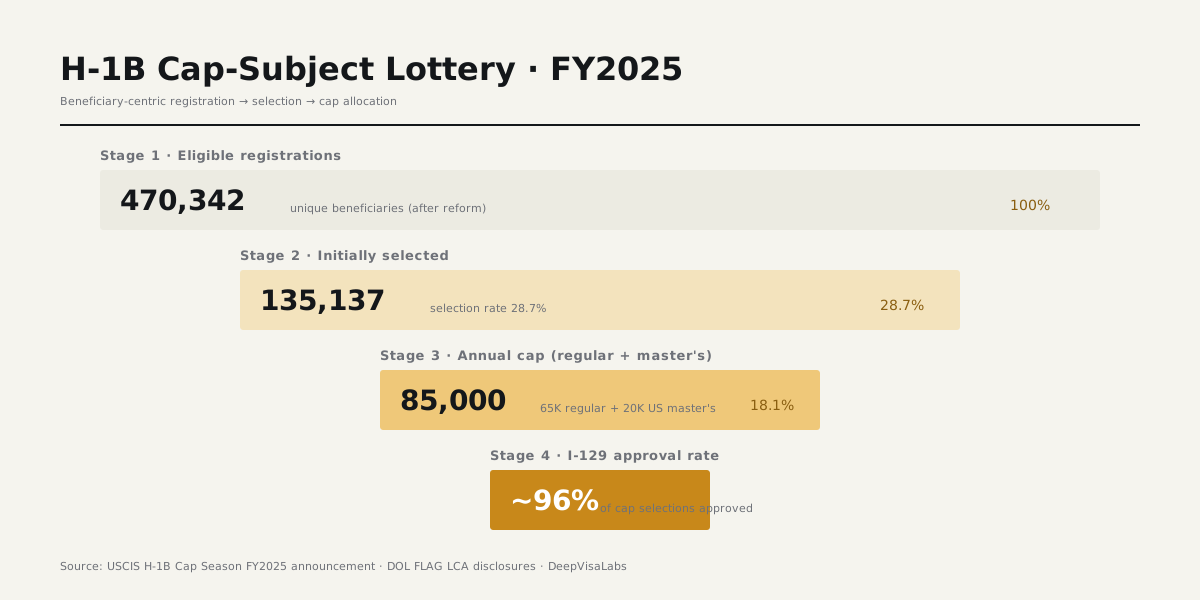
How the H-1B Lottery Works
The H-1B cap-subject lottery runs each spring. Employers register beneficiaries with USCIS during a March electronic-registration window, paying $215 per beneficiary. USCIS then conducts a random selection from registered candidates against the 65,000 regular cap and the 20,000 master's cap under INA §214(g)(1)(A).
Selected registrations are notified by April 1 and have until June 30 to file Form I-129. Cap-exempt employment (universities, nonprofit research) bypasses the lottery entirely.
Beneficiary-Centric Selection (2024 Reform)
The 2024 final rule changed selection to be beneficiary-centric. Each unique beneficiary now gets one entry regardless of how many employers register them. Pre-2024, multiple-employer registrations multiplied a beneficiary's odds; post-2024, each beneficiary has equal selection probability.
Net effect: ~25–30% selection rate per beneficiary in recent FY2025–2026 cycles. Multi-employer registration is no longer a gaming strategy. If a beneficiary is selected, USCIS assigns one of the registering employers (random if multiple) to file the I-129.
The 65,000 + 20,000 Cap
Annual cap allocation: 65,000 visas for the regular cap and 20,000 reserved for beneficiaries with US master's degrees or higher (the "master's cap"). The two pools are processed sequentially: USCIS draws from the 65,000 regular cap first, then conducts a second draw against the 20,000 master's cap from beneficiaries who weren't selected in the regular round.
Master's-eligible beneficiaries thus get effectively two chances. The cap is set by statute and has not changed since 2003 (post-AC21 reduction from 195,000). Bills to raise the cap appear regularly but rarely advance.
Registration Window and Filing Window
Registration opens around March 1 each year, runs ~14 calendar days, and closes mid-March. Initial selections post by March 31. Selected registrations file Form I-129 between April 1 and June 30. If the cap isn't met after this window, USCIS conducts second-round draws — typically July–August.
Filing fees per I-129: $460 base + $1,500 ACWIA (or $750 for employers under 26 workers) + $500 fraud-prevention + $600 asylum-program. Optional $2,805 premium processing.
What Happens When You're Not Selected
Non-selection is final for the cycle. Common bridge strategies: continued OPT or STEM OPT, change to cap-exempt H-1B at a university or nonprofit research employer, O-1 if eligible, L-1 with foreign affiliate work, or departure pending the next March registration.
Cap-exempt H-1B is the most reliable bridge — it bypasses the lottery entirely, files year-round, and once approved makes the beneficiary cap-counted-for-life for portability purposes.
Cross-Pillar Reading
- H-1B Lottery 2026 Results · current cycle outcomes
- H-1B Cap-Exempt · lottery alternative
- H-1B Transfer · AC21 §105 portability
- H-1B Extension · post-cap continuation
- H-1B Sponsorship · employer mechanics
- STEM OPT · 36-month bridge for STEM grads
Bottom line
Verdict: lottery odds are statistically equal per unique beneficiary post-2024. Employers and beneficiaries should focus on registering accurately and maintaining alternate status options for unselected outcomes.
Frequently asked questions
- What is the master's cap?
- The 20,000 master's cap is reserved for beneficiaries holding US master's degrees or higher from accredited institutions. Master's cap selection runs as a second draw after the regular 65,000 cap — beneficiaries with US master's get two effective chances (regular pool + master's pool).
- What if my registration isn't selected?
- Unselected registrations may be picked in second-round draws if USCIS finds the cap wasn't met after the April 1–June 30 filing window. If still unselected, the beneficiary must wait for the next March's registration window — or pursue cap-exempt H-1B, O-1, or other status.
- Can I register myself for the H-1B lottery?
- No. Only employers (or their attorneys) can register beneficiaries — the registration creates an employer-employee relationship affirmation. A beneficiary cannot self-register; an employer must agree to sponsor and pay applicable fees.
- What happens if my employer goes out of business after selection?
- If the petitioning employer ceases operations before the I-129 filing window, the registration is voided. The beneficiary cannot transfer the selection to another employer; they must wait for the next March cycle.
- Can I be selected multiple times for the same beneficiary?
- Each beneficiary is registered with a unique passport number, name, and date-of-birth combination. The system de-duplicates and enters the beneficiary into the lottery once. A selected beneficiary picks one of the multiple employers' I-129 filings.
Sources
- https://www.uscis.gov/working-in-the-united-states/h-1b-specialty-occupations
- https://www.uscis.gov/i-129
- https://www.federalregister.gov/documents/2024/02/02/2024-02158/improving-the-h-1b-registration-selection-process
- https://www.uscis.gov/forms/filing-fees
- https://egov.uscis.gov/processing-times/