H-1B Transfer: AC21 §105 Portability and the New-Employer I-129 Filing
To transfer H-1B, the new employer files I-129 with: certified LCA, prior I-797 and pay stubs, and proof the beneficiary is in valid status. Premium processing ($2,805) is optional but useful when the new role starts immediately. Multiple concurrent transfers are allowed.
What an H-1B Transfer Actually Is
"H-1B transfer" is technically a misnomer — there's no transfer of the existing petition. The new employer files a new Form I-129 with a fresh certified LCA. The beneficiary simply moves to working under the new I-129 once it's filed (under AC21 §105 portability) or approved.
The prior employer's I-129 remains valid until withdrawn. Multiple concurrent H-1B petitions are legal — beneficiaries can hold I-129s with multiple employers simultaneously.
AC21 §105 Portability
Under AC21 §105, beneficiaries can begin work for the new employer once the new I-129 is properly filed (USCIS receipt notice as the marker). Approval is not required to start. If the new I-129 is later denied, the beneficiary stops work but retains underlying H-1B status if the prior I-797 is still valid.
Portability requires the beneficiary to be in valid H-1B status at the time of new I-129 filing. A beneficiary out of status cannot use §105 portability.
What the New Employer Needs to File
Standard transfer package: certified LCA from new employer (filed via DOL FLAG portal), Form I-129, prior I-797 approval notice, recent pay stubs covering past 3–6 months, employment verification letter from current employer, beneficiary's resume and credentials, copy of passport and current I-94, support letter explaining the new specialty-occupation role.
Statutory fees apply same as initial cap-subject filing minus the registration step. Premium processing ($2,805) is available and reduces denial-risk window.
Cap Counting for Transfers
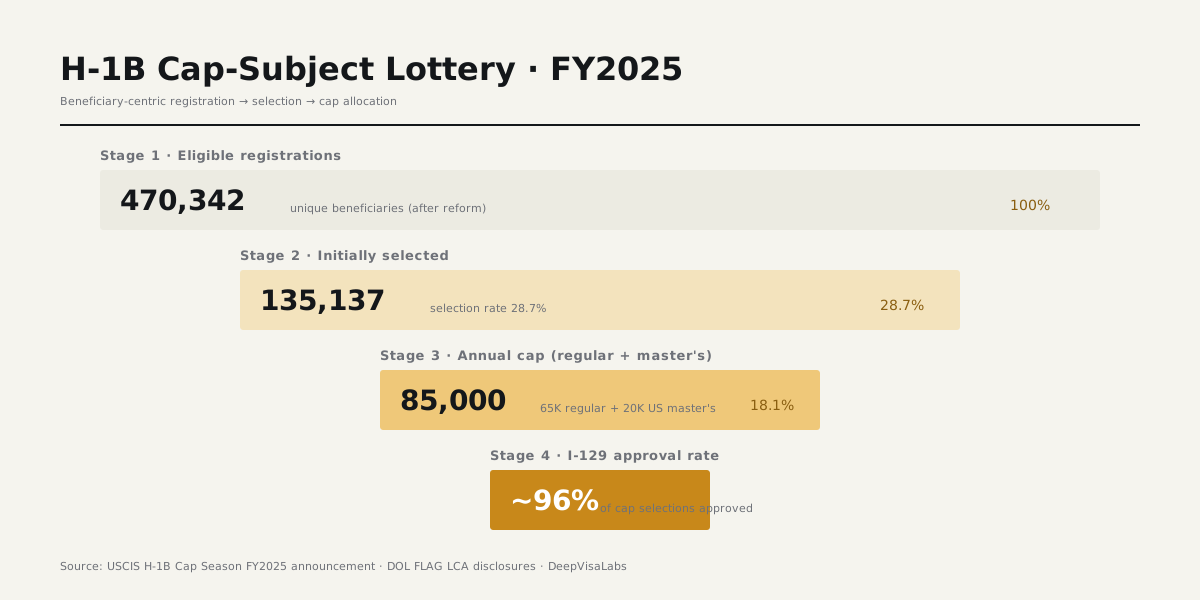
H-1B transfers between cap-subject employers are not re-counted against the 65,000 + 20,000 cap. Once a beneficiary has been counted via initial cap-subject H-1B selection and approval, all subsequent I-129 filings (transfers, extensions, amendments) bypass the lottery and can be filed any time of year.
This "cap-counted-for-life" status is the structural benefit of getting through the initial cap-subject lottery — beneficiaries gain unrestricted year-round H-1B mobility.
The 6-Year Cap Follows the Beneficiary
The 6-year cumulative H-1B cap is beneficiary-tied, not employer-tied. Transferring to a new employer continues the same H-1B clock. Time spent abroad during H-1B status can be "recaptured" with documentary proof and added back to remaining H-1B time.
AC21 §104(c) (3-year extensions past year 6 with approved I-140) and §106(a) (1-year extensions with PERM/I-140 pending 365+ days) are also beneficiary-portable when the underlying I-140 is approved or the priority date issue is documented at the new employer.
Risks: Denial After Starting Work
If the new I-129 is denied while the beneficiary is working under §105 portability, work stops immediately. If the prior I-797 with the previous employer is still valid (and that employer hasn't withdrawn the petition), the beneficiary can return to that employer. Otherwise, the beneficiary falls out of status.
Risk mitigation: keep the prior I-797 valid through transfer pendency (don't have the prior employer withdraw immediately), or use premium processing on the new I-129 to clear the denial risk window quickly.
Cross-Pillar Reading
- H-1B Extension · related I-129 filing path
- H-1B Lottery · why transfer bypasses the lottery
- H-1B Sponsorship · employer-side mechanics
- H-1B Cap-Exempt · alternative employer category
- USCIS Processing Times · current I-129 windows
Bottom line
H-1B transfers are routine under AC21 §105 portability — file new I-129, start work on receipt, treat the prior I-797 as a fallback. Premium processing reduces the denial-risk window for high-stakes transitions.
Frequently asked questions
- When can I start work after H-1B transfer?
- Start date can be the I-129 receipt date with the new employer. The portability provision was created to eliminate the gap between resignation and new-employer approval. Premium processing speeds approval but doesn't change the receipt-date start eligibility.
- What documents does the new employer need?
- Required documents from the beneficiary: prior I-797, recent pay stubs covering the past 3–6 months, current employer verification letter, passport and I-94. New employer provides LCA, support letter explaining specialty occupation, and corporate documents.
- Does H-1B transfer reset the 6-year cap?
- No. The 6-year cumulative cap follows the beneficiary, not the employer. Transferring to a new employer continues the same H-1B clock. Time spent abroad during H-1B status can be 'recaptured' to extend the available time, but transfers themselves don't reset.
- Can I work for both old and new employers concurrently?
- Multiple concurrent H-1B petitions are allowed. The beneficiary works at each worksite under that employer's LCA. Wage requirements apply per-petition, so the beneficiary may have different wage levels at different employers if SOC codes or geographic areas differ.
- What if the new I-129 is denied?
- If the new I-129 is denied while you're working under AC21 §105 portability, you stop work immediately and revert to your prior employer's H-1B (if still valid) or fall out of status. Most workers carry the prior I-797 valid through portability to mitigate this risk.