Citizenship Lawyer: When N-400 Needs Counsel and When It Doesn't
Most attorneys quote $1,200–$5,000 for citizenship lawyer. The variance reflects firm size, geography, and whether the matter requires litigation or appeals — flat-fee structures dominate for routine filings, hourly for complex cases.
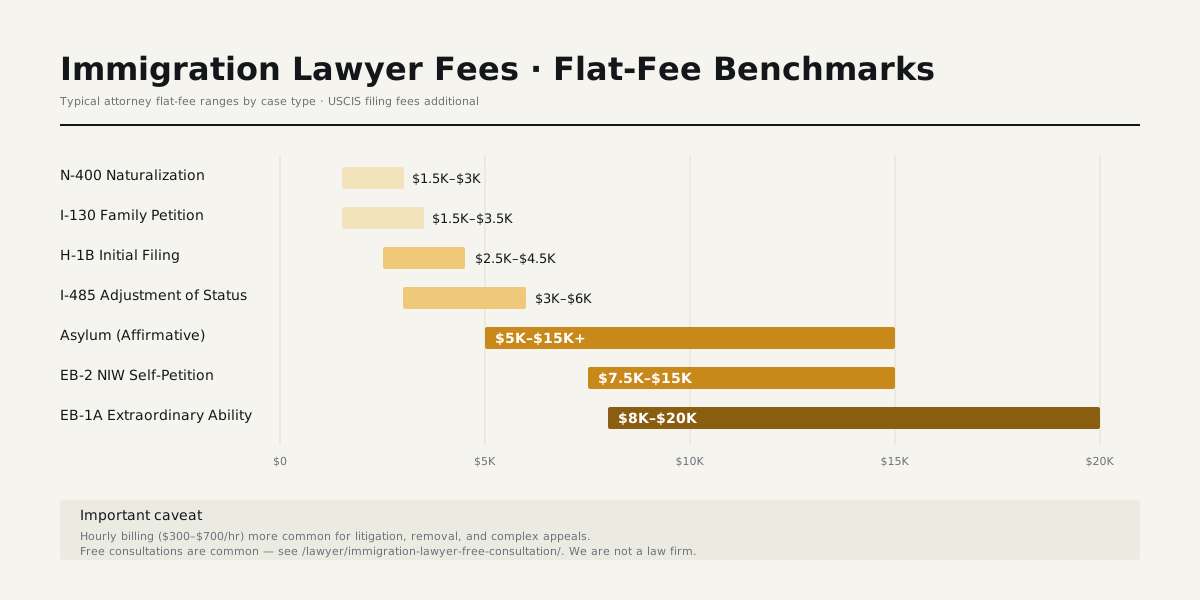
Most N-400 Filings Don't Need a Lawyer
The straightforward N-400 — a lawful permanent resident with 5 years of continuous residence (or 3 years for spouses of US citizens), no criminal history, no extended absences, all taxes paid — is filed pro se by hundreds of thousands of applicants every year. USCIS Form N-400 instructions are written for self-filers, the online filing system is well-supported, and the interview tests basic civics and English.
That said, citizenship cases with complications can fail in ways that are difficult to undo — N-400 denials based on misrepresentation can trigger removal proceedings, and concealed criminal history can lead to denaturalization years after approval. The cost of getting it wrong on a complicated case is high.
When a Citizenship Lawyer Is Worth the Cost
Good Moral Character Issues
The applicant must demonstrate "good moral character" during the statutory period (5 years, or 3 years for the spouses-of-US-citizen path) per USCIS Policy Manual Volume 12. Conditional bars include any conviction for a crime involving moral turpitude, two or more convictions with aggregate sentence of 5+ years, controlled-substance offenses, prostitution, alien smuggling, false claim to US citizenship, and willful failure to support dependents. Unconditional bars include murder convictions and aggravated felonies.
Even non-bar offenses (DUIs, simple assaults, shoplifting) require a discretionary good-moral-character analysis. A specialist citizenship lawyer assesses whether the conduct triggers a bar, requires waiver, or supports denial of discretion — and whether filing is even safe given the criminal record.
Continuous Residence and Physical Presence
The applicant must have been a lawful permanent resident with continuous residence for the statutory period and physical presence for at least half of it. Trips abroad of 6 months break the presumption of continuous residence; trips of 1 year automatically do. Specialists analyze travel records and structure timing to clear both clocks.
Selective Service Registration
Male applicants who lived in the US between 18 and 26 must have registered for Selective Service. Failure to register can be construed as evidence of lacking good moral character; a specialist drafts the explanation and supporting evidence (e.g. unawareness, late registration).
Tax Compliance
Failure to file tax returns (or filing as a non-resident while a green-card holder) raises good-moral-character and abandonment-of-LPR-status flags. Specialists review tax returns for the statutory period and address discrepancies before filing N-400.
Prior Misrepresentation
Past misrepresentations on green-card applications, visa applications, or border encounters can come up at the N-400 interview through extensive USCIS records review. Concealment is the worst response; specialists draft preemptive disclosures.
Other Citizenship Matters Beyond N-400
Derivation of Citizenship
Children who became US citizens automatically when a parent naturalized (under the Child Citizenship Act of 2000) often need Form N-600 to obtain a Certificate of Citizenship. The eligibility analysis under INA §320 is fact-specific (parent's naturalization date, child's age, child's residence with the parent), and complex cases benefit from specialist review.
Acquisition at Birth
Children born abroad to US-citizen parents may have acquired citizenship at birth under INA §301 or §309. The acquisition analysis depends on the parent's residence in the US before the child's birth and varies by birth-year cohort. Specialists handle CRBA (Consular Report of Birth Abroad) and N-600 acquisition cases.
Denaturalization Defense
The Department of Justice can file civil or criminal denaturalization actions against citizens whose original naturalization was procured by fraud or concealed material facts. Defense requires immigration-litigation experience and federal-court practice.
Cost Range
Citizenship attorney fees in 2026 typically span:
- Routine N-400 (no complications): $1,000–$2,500 if you decide to engage counsel anyway.
- N-400 with good-moral-character issues: $2,500–$5,000.
- N-400 with prior denials, criminal history, or tax issues: $3,000–$7,000.
- N-600 derivation/acquisition: $1,000–$2,500.
- Denaturalization defense: hourly billing, typically $10,000+ retainer.
Government fees: N-400 is over $700 paper / $640 online (as of 2024 fee rule); N-600 is over $1,300; biometrics fee is included in many filings. Confirm at the USCIS filing-fees page.
Bottom line
Decision framework: bar status verified, case-type volume in N-400 naturalization with complications, written fee scope, transparent communication policy. Skip outcome guarantees and unverifiable success rates.
Frequently asked questions
- How much does an immigration lawyer cost for citizenship lawyer?
- Most US immigration attorneys quote flat fees for predictable form filings and hourly billing for litigation, appeals, or complex consular issues. Always ask for a written engagement letter listing what is and is not included.
- How do I know if an immigration attorney is licensed?
- Beyond bar verification, search the EOIR list of recognized organizations and accredited representatives if you are working with a non-profit. Be cautious of 'visa consultants' or 'notarios' who are not licensed attorneys — that practice is unauthorized in most states.
- What questions should I ask before hiring?
- Useful questions: how many cases of this exact type have you handled in the past year? What is the flat-fee scope? When and how do you communicate updates? What happens if the case is denied — do you handle MTRs / appeals?
- Are flat fees or hourly billing better?
- Most routine immigration filings use flat-fee structures. Hourly billing applies when scope is unpredictable — think federal-court litigation, complex EB-1A petitions, asylum cases, or removal defense.
- Can I file my immigration case without an attorney?
- Self-filing is the default for many people. An attorney adds the most value when the case has complications: prior denials, unusual eligibility paths, RFEs that require legal arguments, or when timing pressure leaves no room for procedural error.