Labor Certification: The PERM Process for EB-2 and EB-3 Green Cards
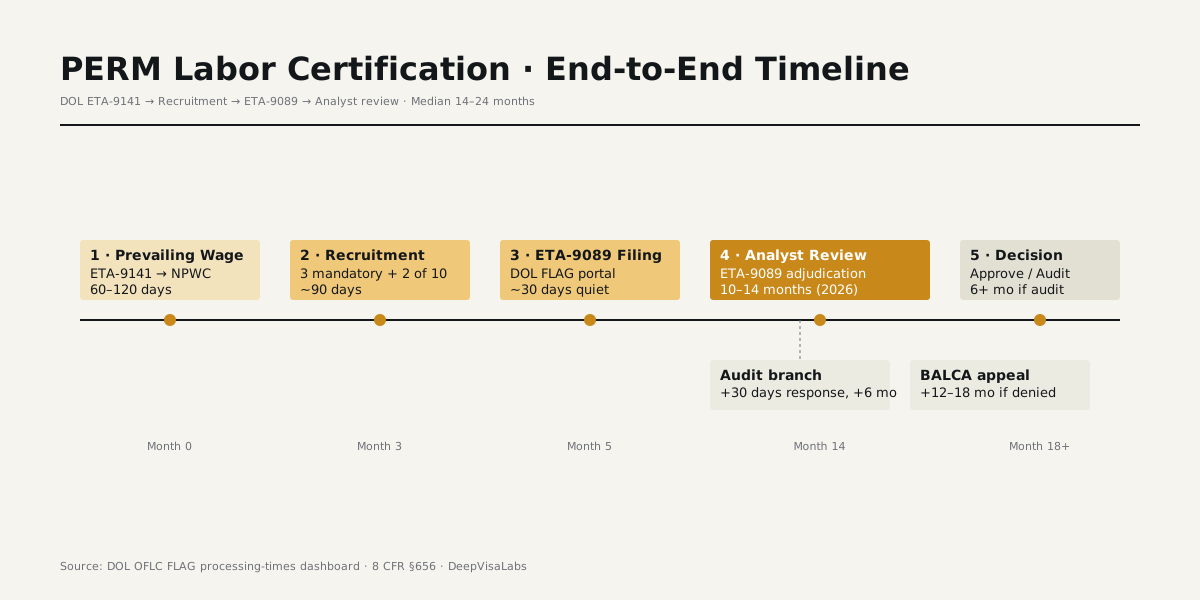
PERM processing runs in three stages — analyst review, audit (if selected), and BALCA appeals — with current DOL FLAG dashboard quoting analyst review at 9–12 months, audited cases 16–24 months, and BALCA appeals 24+ months.
What Labor Certification Is
Labor certification is the US Department of Labor's pre-USCIS test that the employer cannot find a qualified US worker to fill the offered position at the prevailing wage. It is administered through the Program Electronic Review Management system — known as PERM — and culminates in a certified Form ETA-9089 issued by the DOL Office of Foreign Labor Certification.
Labor certification is the gating step for most EB-2 and EB-3 employment-based green-card cases. Without certified PERM, the employer cannot file the I-140 immigrant petition with USCIS; the PERM filing date becomes the beneficiary's priority date for visa-bulletin purposes. EB-1 (extraordinary ability, multinational manager, outstanding researcher), EB-2 NIW (national interest waiver), and EB-5 (investor) bypass PERM entirely.
The Three-Stage Process
Stage 1 — Prevailing Wage Determination (PWD). The employer files Form ETA-9141 on the DOL FLAG portal asking the National Prevailing Wage Center to determine the prevailing wage for the offered occupation, area of intended employment, and required experience level. NPWC processing typically runs 4–8 months in 2026 per flag.dol.gov/processingtimes.
Stage 2 — Recruitment. Once PWD is issued, the employer conducts a 60-day recruitment campaign: a job order with the State Workforce Agency, two Sunday newspaper ads, and three to ten additional recruitment steps depending on whether the position is professional or non-professional. After the recruitment window closes, a 30-day cooling period precedes filing.
Stage 3 — Filing and Adjudication. The employer files the certified ETA-9089 on FLAG. DOL analysts review the application; current analyst-review processing runs 9–12 months. Audit selection adds 7–12 months. BALCA appeal — if the case is denied — exceeds 24 months in current queues.
Form ETA-9089: The Application
ETA-9089 is filed on the DOL FLAG portal at flag.dol.gov/programs/perm. The form captures employer information, beneficiary information, the offered position's title and SOC code, the prevailing wage determined at Stage 1, the recruitment evidence, and the employer's attestation that no qualified US worker was found.
The 2023 ETA-9089 modernization integrated the form with the FLAG portal's case-tracking system. Common drafting errors that trigger denials: wage offer below PWD, requirements that exceed the SOC's standard occupational training, restrictive job requirements not justified by business necessity, and recruitment that fails to reach US workers in good faith.
Recruitment Requirements
For professional positions (those requiring a US bachelor's degree or higher), the standard recruitment package includes: (1) State Workforce Agency job order for 30 days, (2) two Sunday newspaper advertisements in the area of intended employment, (3) employer's website job posting, (4) one of three additional steps from a regulatory list (job fair, on-campus recruiting, professional association posting, etc.).
Non-professional positions follow a stripped-down recruitment package focused on State Workforce Agency posting and newspaper ads. Documenting recruitment is critical — the employer must retain a recruitment file (newspaper tearsheets, dated screenshots of online ads, resume review log, applicant tracking notes) for at least 5 years post-filing under DOL recordkeeping rules.
Common Denial Triggers
Wage offer below the PWD: this is the single most common denial reason. The PWD is binding — the employer cannot offer below the determined prevailing wage, and DOL audit verification will compare the offered wage to the PWD as well as to the actual paid wage post-certification.
Requirements that don't match the SOC code: if the position is classified under a SOC code with a standard occupational requirement of "bachelor's degree + 2 years experience," the employer cannot require "master's degree + 5 years experience" without documenting business necessity. Such restrictive requirements often draw audit selection.
Recruitment failures: missed Sunday newspaper deadlines, insufficient documentation of resume review, posting in publications that don't circulate in the area of intended employment.
PERM Audit Defense
Audit selection rates have historically run 25–35% — randomly selected cases plus targeted audits based on filing patterns. Audited employers receive a Notice of Audit and have 30 days to produce the recruitment file. Failure to respond timely results in denial; supervised recruitment is the secondary remedy.
Best practice: assemble the audit-defense file during recruitment, not after. Date-stamp every recruitment artifact, retain the original tearsheets and signed applicant disposition notes, and prepare a one-page recruitment summary with chronology. Detailed audit walkthrough.
Cross-Pillar Reading
- PERM Processing Time · current FLAG dashboard numbers
- PERM Audit · selection sources and document file
- Prevailing Wage Determination · ETA-9141 walkthrough
- EB-2 NIW · the PERM-bypass alternative
- H-1B Extension · AC21 §106(a) extensions for pending PERM cases
Bottom line
Verdict on PERM timing: the binding constraint is DOL workflow, not the visa bulletin. Build the I-140 strategy assuming 15–24 months from PWD to ETA-9089 certification.
Frequently asked questions
- What happens if my PERM case is audited?
- Audit selection adds roughly 7–12 months to PERM processing. The employer must produce the recruitment file (newspaper ads, job order, resume review log, etc.) within 30 days of the audit notice.
- What is supervised recruitment?
- Under supervised recruitment, the Certifying Officer specifies the recruitment plan, advertisement text, and reporting requirements. This adds 6–12 additional months and significantly raises filing burden.
- What is BALCA and how long do appeals take?
- BALCA reviews PERM denials de novo against the administrative record. Current processing exceeds 24 months. Refiling a corrected PERM is often faster than waiting on BALCA — but loses the original priority date.
- When is the prevailing wage determination needed?
- Before filing PERM, the employer must obtain a prevailing wage determination (PWD) from DOL's National Prevailing Wage Center via Form ETA-9141. PWD processing currently runs 4–8 months and is the gating step.
- Does premium processing exist for PERM?
- PERM has no premium-processing option. Acceleration only happens through case characteristics (e.g., physician National Interest Waiver paths bypass PERM entirely) or by avoiding audit triggers in the application.