Visa Bulletin Predictions: Methodology, Trend Analysis, and Forward Movement Forecasts
Visa Bulletin predictions for All Chargeability Areas is current this month: every qualifying applicant has a visa number available, and USCIS will accept the corresponding I-485 filings without waiting on the queue.
How Visa Bulletin Predictions Are Made
The State Department's Visa Office publishes the bulletin monthly with no formal forward-looking guidance. Predictions come from third-party analysis: Charlie Oppenheim (former Visa Office Chief, now at Wasden Banias) provides commentary at AILA conferences, and law firms publish their own trend analyses based on movement patterns.
Official forward-looking statements come only when the Visa Office briefs AILA or publishes occasional explanatory notes on travel.state.gov. AILA aggregates and republishes these.
What Drives Forward Movement
The Visa Office balances projected demand (from USCIS adjustment-of-status filings and consular pipeline) against statutory caps under INA §202–203. The cut-off advances when supply exceeds demand; it holds or retrogresses when demand outpaces caps.
Fiscal-year final quarter (July–September) often sees retrogression as annual numbers exhaust. New fiscal year (October) often brings forward movement as fresh caps reset.
Trend Analysis by Category
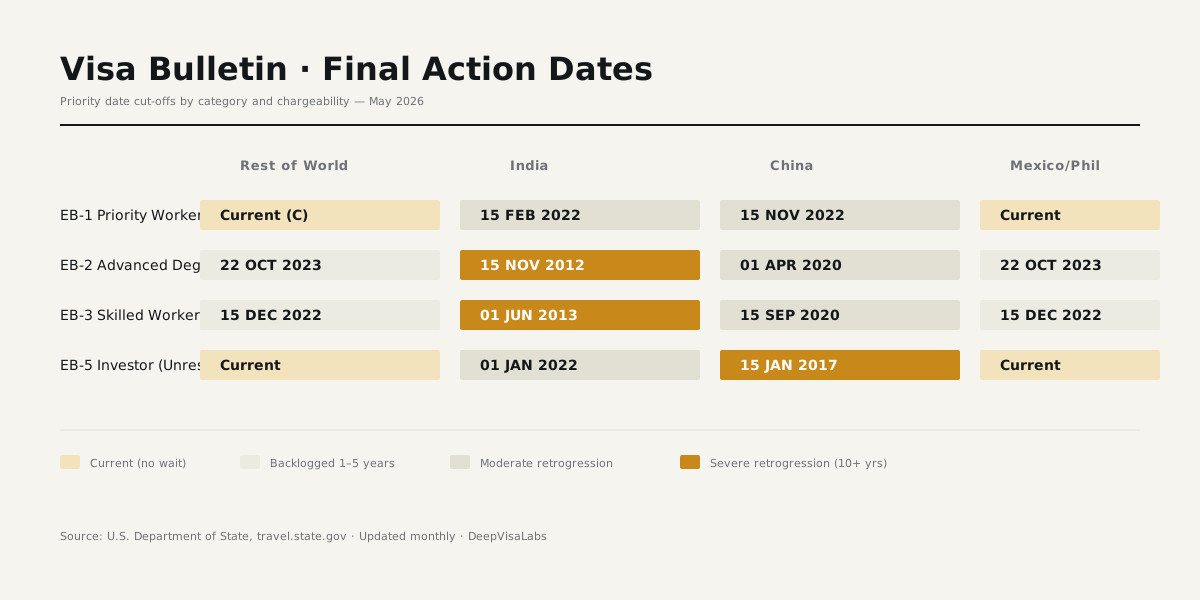
EB-1: Worldwide typically current; India and China hold ~3 years backlog with limited forward movement. EB-2: Worldwide current; India catastrophically backlogged (decade+); China 3–5 years. EB-3: Worldwide current; India 11+ years; China 3–5 years. EB-3 sometimes moves faster than EB-2 in country lines, triggering downgrade strategies.
EB-5 set-asides (rural, high-unemployment, infrastructure) typically remain current as their carve-outs absorb less demand than the unreserved EB-5 line.
Family-Based Categories
F1 (unmarried adult children of US citizens), F2A (LPR spouse and minor children), F2B (LPR unmarried adult children), F3 (married children of US citizens), F4 (siblings of US citizens) — each has its own queue with separate per-country movement. F4 is the longest-running backlog (Mexico, Philippines, India face multi-decade waits).
F2A often retrogresses and advances within the same fiscal year as USCIS demand fluctuates. F1 and F3 typically move in 2–4 month increments per year.
Why Predictions Are Inherently Uncertain
The Visa Office's projection methodology weights demand from active I-485 filings, NVC pipeline, and consular interview scheduling. None of these are public real-time data — practitioners infer movement from monthly bulletin changes. Sudden retrogression often catches even experienced analysts off-guard.
The most reliable prediction is recent trend continuation: if a category has been moving 1–3 weeks per month, expect similar movement in the next 1–2 months barring fiscal-year boundaries or unusual events.
Cross-Pillar Reading
- Visa Bulletin · current month's full table
- EB-2 Priority Date · category-specific cut-off
- EB-2 Green Card · the broader category
- EB-3 Green Card · downgrade target
- Priority Date Tracker · interactive widget
Bottom line
Current category — no chargeability backlog. File when ready; processing time is the binding constraint, not visa availability.
Frequently asked questions
- How is the Visa Bulletin predictions cut-off chosen each month?
- Cut-offs move based on rolling demand: when consular and adjustment use leaves room, the date advances; when the category is oversubscribed, the date holds or retrogresses.
- What is the difference between Final Action Dates and Dates for Filing?
- Final Action Dates are the binding date — when your green card or visa is issued. Dates for Filing let you submit the I-485 earlier and gather a place in line; eligibility for the Filing chart depends on USCIS's monthly election.
- Can the Visa Bulletin predictions cut-off go backwards?
- Retrogression is common, especially in fiscal-year final quarters, when categories run out of available numbers and the date snaps back to slow new filings.
- What chargeability area applies to me?
- For the visa bulletin, you are charged to your country of birth. Applicants born in countries that hit the per-country cap (India, China, Mexico, Philippines) face the named-country queue; everyone else uses the All Chargeability Areas column.
- Where does the official Visa Bulletin predictions bulletin come from?
- All cut-offs come from the State Department's Visa Bulletin program page at travel.state.gov. USCIS then posts on its 'When to File' page which chart it will accept that month.
Sources
- https://travel.state.gov/content/travel/en/legal/visa-law0/visa-bulletin.html
- https://www.uscis.gov/visabulletininfo
- https://www.aila.org/
- https://www.state.gov/bureaus-offices/under-secretary-for-management/bureau-of-consular-affairs/
- https://www.uscis.gov/working-in-the-united-states/permanent-workers