CPT vs OPT: Differences, Timing Strategy, and Combined Eligibility Limits
CPT vs OPT decision: CPT is DSO-authorized, curriculum-tied, and during the program; OPT is USCIS-authorized via I-765, post-completion (or pre-completion in limited cases), and not curriculum-tied. Full-time CPT for 12+ cumulative months disqualifies you from post-completion OPT.
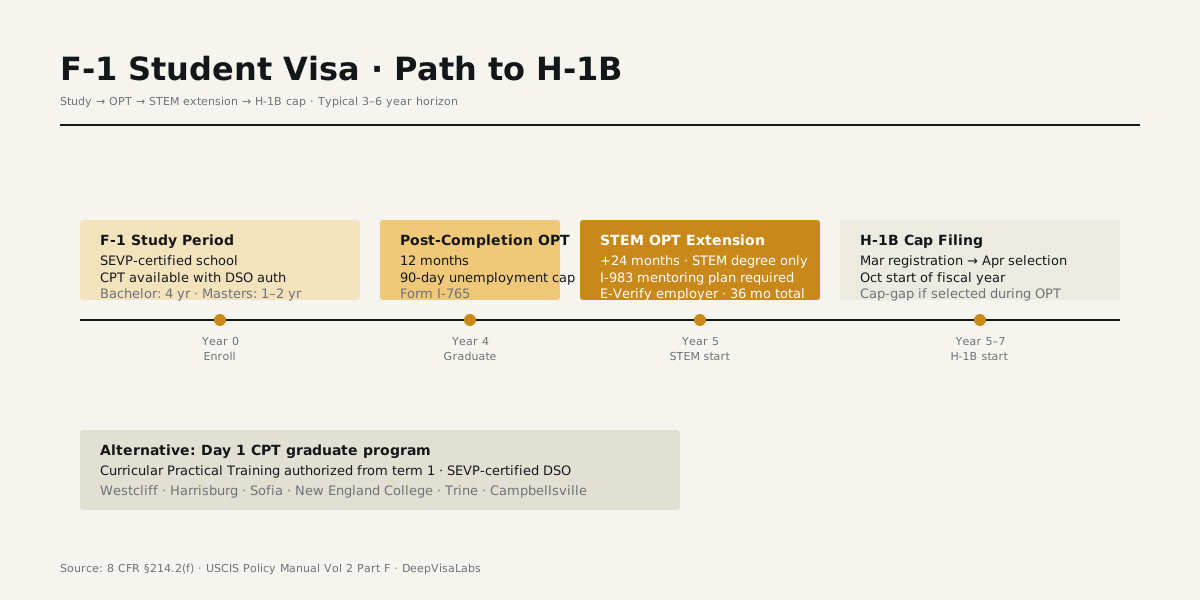
The Core Differences
CPT and OPT are both F-1 work-authorization options but differ structurally:
- Authorization: CPT — DSO authorizes via SEVIS (no USCIS). OPT — USCIS approves via Form I-765 with EAD card.
- Timing: CPT — during studies. OPT — primarily post-completion (12 months); pre-completion is rare.
- Curriculum: CPT — must be integral to curriculum. OPT — open to any field-aligned employer.
- Employer: CPT — specific employer per DSO authorization. OPT — open work authorization across employers.
The 12-Month Full-Time CPT Trap
The critical interaction: 12 months of cumulative full-time CPT eliminates post-completion OPT eligibility for that degree level. Part-time CPT (≤20 hours/week) doesn't count against this cap; only full-time CPT (>20 hours/week) accumulates.
Strategic implication: students who use full-time CPT extensively during a 2-year master's program may lose their 12-month OPT — making post-graduation work authorization unavailable for that degree.
Recommended Sequencing
Standard sequence for F-1 students who want both CPT and OPT:
- During studies: part-time CPT (≤20 hrs/week) when curriculum supports it — no OPT impact
- Summer breaks: full-time CPT possible if curriculum permits — counts toward 12-month cap, so use sparingly
- Post-graduation: full 12-month post-completion OPT
- If STEM-eligible: 24-month STEM OPT extension (E-Verify employer + I-983 required)
This sequence preserves both during-studies work and the full post-graduation runway.
Which Has More Flexibility
OPT is more flexible: open work authorization, any field-aligned employer, employer changes without USCIS notification, multiple concurrent jobs allowed. CPT is constrained: DSO-authorized for specific employer, curriculum-tied, requires fresh authorization for each new role.
OPT also unlocks STEM extension and broader compensation arrangements. Most F-1 students prefer OPT for post-graduation; CPT is a during-studies option when curriculum aligns.
Application Process Comparison
CPT: Job offer → DSO authorization → I-20 update → start work. Typically 1–2 weeks. No fee, no USCIS involvement.
OPT: DSO recommendation → file I-765 with USCIS → 3–5 month processing → EAD card → start work. $410 fee. USCIS approval required.
The CPT process is faster and simpler; OPT requires advance planning to avoid gaps.
When to Use Which
Use CPT when: (1) curriculum requires off-campus training, (2) employer has a specific role tied to academic learning, (3) part-time work during academic terms.
Use OPT when: (1) post-graduation employment, (2) flexibility to change employers, (3) working in field-aligned but not curriculum-required roles.
Cross-Pillar Reading
- OPT — Optional Practical Training · post-completion details
- CPT — Curricular Practical Training · during-studies details
- STEM OPT 24-Month Extension · OPT extension for STEM degrees
- Day 1 CPT · special-case CPT
- H-1B Lottery · post-OPT transition
Bottom line
Verdict: most students use both. CPT for relevant during-studies roles; OPT for post-graduation work. Avoid full-time CPT exceeding 12 months cumulatively — it eliminates post-completion OPT for that degree level. Plan the full sequence early.
Frequently asked questions
- Can I use both CPT and OPT for the same degree?
- Strategic sequence: part-time CPT during studies (no OPT impact) → full 12-month post-completion OPT. STEM students extend with 24-month STEM OPT. Some students use modest full-time CPT (under 12 months) without losing OPT eligibility.
- Which gives more flexibility?
- OPT > CPT in flexibility. OPT lets you work for any employer in your field, change jobs freely, pursue STEM extension. CPT is curriculum-bound and DSO-authorized for specific roles. Most F-1 students prefer OPT for post-graduation.
- Can I travel internationally on OPT or CPT?
- Travel rules: F-1 visa, valid passport, current I-20 with DSO travel signature within 6 months. OPT requires EAD; CPT requires I-20 CPT endorsement. Carry employer letter and recent pay stubs; CBP can refuse entry if continued employment can't be proven.
- What happens if I'm unemployed during OPT?
- Unemployment days accumulate across the 12-month OPT period. Days between jobs count; weekends and holidays count if you're not working. Tracking is critical because exceeding 90 days terminates F-1 status.
- Can I change employers during OPT?
- OPT permits unlimited employer changes. The EAD card is yours; employers verify via Form I-9. Update SEVIS through your DSO when you start or end employment — this is mandatory within 10 days, and missing reports can affect status.
Sources
- https://studyinthestates.dhs.gov/students/training-opportunities-in-the-united-states/curricular-practical-training
- https://studyinthestates.dhs.gov/students/training-opportunities-in-the-united-states/optional-practical-training
- https://www.uscis.gov/working-in-the-united-states/students-and-exchange-visitors/students-and-employment
- https://www.ice.gov/sevis/practical-training
- https://www.uscis.gov/i-765