Curricular Practical Training (CPT): DSO Authorization, Curriculum Integration, and the 12-Month Trap
CPT requires (1) curriculum requirement for off-campus training, (2) DSO authorization in SEVIS, (3) job offer for the specific role. 12 months cumulative full-time CPT triggers loss of post-completion OPT eligibility.
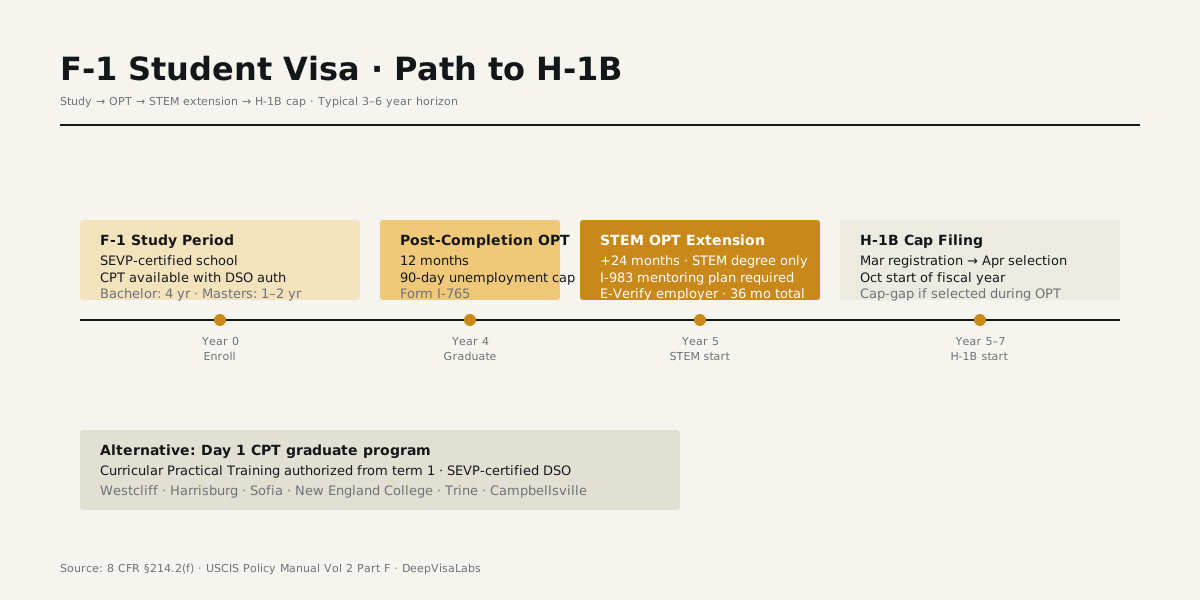
What CPT Is
Curricular Practical Training (CPT) lets F-1 students work off-campus when the work is integral to the curriculum. Authorized by the Designated School Official (DSO) directly through SEVIS — no USCIS application required. See SEVP CPT guidance.
CPT differs from OPT in three ways: (1) DSO authorizes (not USCIS), (2) curriculum-tied (not optional), (3) employer-specific (not open).
Eligibility
Standard rule: F-1 students must complete one academic year of full-time enrollment before CPT is allowed. Some graduate programs offer "Day-1 CPT" where curriculum requires off-campus training from the first term — this is regulatorily permissible under 8 CFR §214.2(f)(10)(i) but draws elevated USCIS scrutiny on later filings.
The work must be integral to the curriculum — typically through course requirements, internship requirements, or thesis-related employment. The DSO determines eligibility based on the academic program structure.
Part-Time vs Full-Time CPT
Part-time CPT (≤20 hours/week) does not affect post-completion OPT eligibility. Full-time CPT (>20 hours/week) accumulates against a 12-month cap; exceeding 12 months full-time CPT eliminates post-completion OPT eligibility for that degree level.
The 12-month full-time CPT trap is critical. Students who use full-time CPT extensively during a 2-year master's program can lose OPT — making the post-graduation work authorization unavailable for that degree.
Authorization Process
Process: (1) student receives a job offer from an employer, (2) student requests CPT authorization from DSO with course / curriculum justification, (3) DSO authorizes in SEVIS and issues an updated I-20 with CPT endorsement, (4) student begins employment as authorized.
CPT authorizations are employer-specific and time-bound. Multiple CPT periods with different employers throughout a program are permitted as long as each is curriculum-justified.
Field-Alignment Requirement
The work must align with the major field of study. The DSO won't authorize unrelated employment. The "integral to curriculum" standard is enforced — courses, internship requirements, or thesis-related work typically support CPT authorization.
Some flexibility exists for cross-disciplinary work; pure field-mismatch is denied. USCIS may later challenge the curriculum-integration claim in subsequent visa filings (H-1B, I-485) when the CPT work appears unrelated to the academic program.
Day-1 CPT and Downstream Risk
Day-1 CPT — where students start CPT-authorized employment from the first term of a graduate program — is regulatorily permitted but operationally fragile. USCIS treats heavy Day-1 CPT use as evidence the F-1 status was held primarily for work authorization rather than legitimate study.
Downstream filings (H-1B I-129, I-140, I-485, I-765) for Day-1 CPT students see elevated RFE rates. See Day 1 CPT page for detailed risk analysis.
Cross-Pillar Reading
- OPT — Optional Practical Training · post-completion counterpart
- Day 1 CPT · special-case CPT with elevated risk
- CPT vs OPT · decision guidance
- STEM OPT · post-completion 24-month extension
- H-1B Lottery · post-CPT transition
Bottom line
CPT is the right tool when curriculum genuinely requires off-campus training. DSO-authorized, no USCIS filing, integrates with the academic program. Watch the 12-month full-time CPT trap — it permanently eliminates post-completion OPT for that degree level.
Frequently asked questions
- Can I travel internationally on OPT or CPT?
- Yes for both, with documentation. OPT: carry valid passport, EAD, F-1 visa, I-20 with travel signature within 6 months, and proof of employment / job offer. CPT: same documents, with the I-20 showing CPT authorization endorsement. Re-entry depends on CBP officer review.
- What happens if I'm unemployed during OPT?
- Unemployment days accumulate across the 12-month OPT period. Days between jobs count; weekends and holidays count if you're not working. Tracking is critical because exceeding 90 days terminates F-1 status.
- Can I change employers during OPT?
- OPT permits unlimited employer changes. The EAD card is yours; employers verify via Form I-9. Update SEVIS through your DSO when you start or end employment — this is mandatory within 10 days, and missing reports can affect status.
- Are F-1 students subject to FICA on OPT/CPT wages?
- F-1 students are FICA-exempt during the period they are non-resident aliens (typically the first 5 calendar years per Substantial Presence Test exempt-individual rule). OPT and CPT wages within this window are exempt from Social Security and Medicare tax under IRC §3121(b)(19).
- What's the difference between part-time and full-time CPT?
- Full-time CPT >20 hrs/week deducts from OPT eligibility cumulatively. The 12-month threshold is critical: 12 months full-time CPT = no more post-completion OPT for that degree. Part-time CPT (≤20 hrs/week) is unrestricted for OPT purposes.
Sources
- https://studyinthestates.dhs.gov/students/training-opportunities-in-the-united-states/curricular-practical-training
- https://www.ice.gov/sevis/practical-training
- https://www.uscis.gov/working-in-the-united-states/students-and-exchange-visitors/students-and-employment
- https://studyinthestates.dhs.gov/students/study/employment
- https://www.uscis.gov/i-20