Best Immigration Lawyer Near Me: Why Geography Is the Wrong Frame
best immigration lawyer near me is a specialized practice area. The factors that matter most when evaluating an attorney are: bar admission status, case-type experience (not just years of practice), case-management transparency, and whether they charge flat fees or hourly.
USCIS Adjudicates Federally — Geography Rarely Matters
USCIS is a federal agency. An H-1B petition filed in Manhattan is adjudicated at the same Vermont, California, Texas, or Nebraska service center as one filed in Boise. The attorney's office address has no bearing on which service center reviews the petition or what evidence USCIS will accept. The "near me" frame is a habit imported from local civil practice (personal injury, family court) where geography genuinely matters; it transfers poorly to immigration.
The cases where geography does matter are narrow:
- EOIR court hearings. Removal proceedings, bond hearings, and individual hearings happen at specific immigration courts. Counsel usually needs to be physically present (some hearings allow video). The EOIR-specific lawyer pool matters per court.
- USCIS interviews. Adjustment-of-status interviews, naturalization interviews, and asylum interviews happen at field offices. Counsel attends; some attorneys handle out-of-area interviews via day-trip or local co-counsel.
- Local-language client communication. If you need bilingual case management in Spanish / Mandarin / Hindi / Vietnamese / Arabic, the in-person meeting comfort may be higher with a local firm even if all paper work is virtual.
For everything else — H-1B, EB-2 NIW, EB-1A, I-130, OPT, naturalization, FBAR, asylum I-589 affirmative — geography is functionally a search-engine artifact, not a legal-quality signal.
What Actually Predicts Case Outcome
Empirically, four factors correlate with case outcomes; none is geographic:
- Case-type specialization. An EB-1A specialist who has filed 200+ cases will preempt RFEs that a generalist won't see coming.
- Engagement-letter scope. Cases that fail often fail because the lawyer's scope of work didn't include the work that actually mattered (RFE drafting, evidence supplementation, federal-court mandamus).
- Communication cadence. Cases that drift fail to respond timely to RFEs or NOIDs. A firm with proactive monthly USCIS-status checks catches problems earlier than one that only contacts you on receipt.
- File ownership. Cases handled paralegal-only with attorney sign-off at the end produce more procedural errors than cases the named attorney drafts personally.
Virtual / Remote-First Immigration Practice in 2026
The 2020-2024 period normalized fully remote immigration representation. Most filings are paper or USCIS-online; signatures are notarized digitally; consultations happen on Zoom; document collection runs through encrypted client portals. A specialist firm 2,000 miles away can run a case as effectively as a generalist down the street — sometimes more so.
What to ask a remote firm:
- What's your client-portal stack? (Clio, MyCase, custom portal, encrypted email, etc.)
- How do you handle USCIS interviews — day-trip, local co-counsel, or hand-off?
- Are you licensed and admitted in a state? (Some online "immigration consultants" are not bar-licensed.)
- Have you handled any EOIR appearances in the immigration court I'd be assigned to? (relevant only for removal cases)
Lead-Gen Platforms with Pre-Vetted Attorneys
Some platforms screen attorneys for active bar status and case-type experience, then refer cases to attorney partners:
- Boundless — strongest in family-based (I-130 spouse, K-1 fiancé, naturalization) cases.
- Lawfully — case-status tracking with attorney directory.
These are not law firms. They refer to attorney partners who carry independent malpractice coverage. Read the platform's vetting policy and fee structure before relying on the directory; the platform's standard is not necessarily yours.
For attorney-only directories without the lead-gen layer, the American Immigration Lawyers Association member directory is a starting point — AILA membership is voluntary but signals professional commitment.
When "Near Me" Genuinely Helps
If your case has any of these characteristics, local counsel is worth the geographic premium:
- You're in detention or have an EOIR hearing scheduled in the next 30 days.
- You have a USCIS interview coming up at a specific field office and want counsel physically present.
- You're filing an I-130 spouse case where the bona-fides examiner has called you in for a Stokes interview.
- You need ongoing in-person criminal-immigration coordination with a local criminal-defense attorney (post-conviction, immigration-consequences review).
Bottom line
Selection criteria for selecting an immigration lawyer regardless of geography: documented prior approvals in the same form type, AILA membership (useful but not required), explicit scope and refund terms, and a single point of contact for case status.
Frequently asked questions
- What questions should I ask before hiring?
- Specifics first: case-type volume, success rate (which can be hard to verify), engagement letter terms, communication policy, and which attorney or paralegal does the actual drafting. General experience claims are less informative than category-specific track records.
- Are flat fees or hourly billing better?
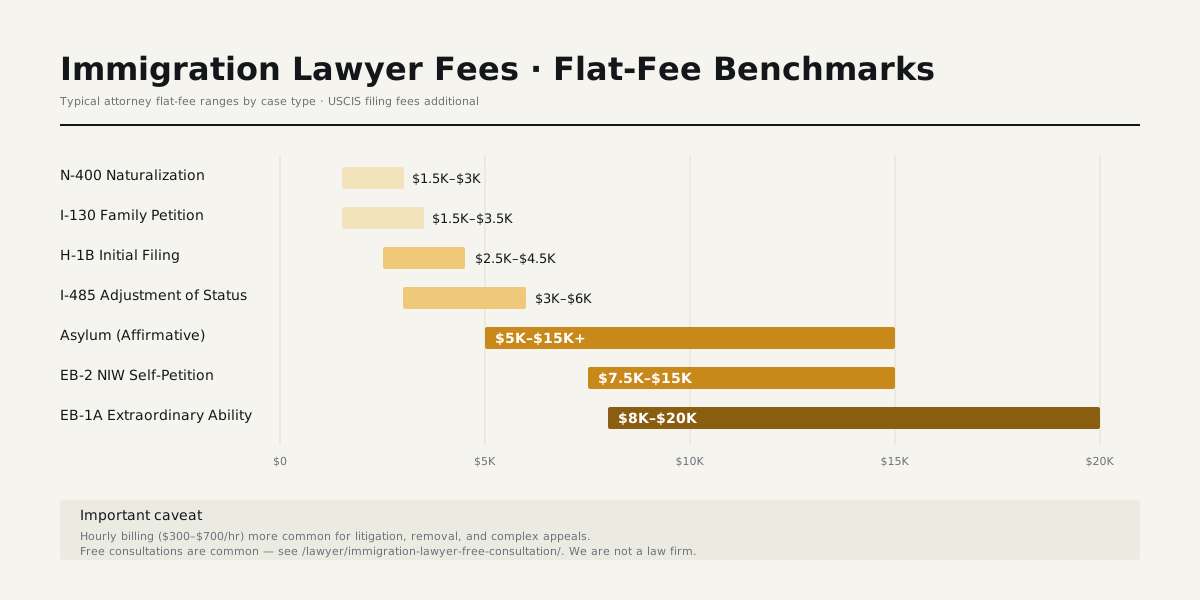
- The right model matches scope predictability. A bounded I-130 spouse petition is a flat-fee fit; a multi-year asylum case with consular and federal-court touchpoints is hourly territory.
- Can I file my immigration case without an attorney?
- Pro-se filing is fully legal. The cases that benefit most from attorney involvement are ones with prior denials, criminal-history issues, complex eligibility theories (NIW, asylum, EB-1A), or RFE responses requiring legal-argument drafting.
- What are red flags when choosing an immigration lawyer?
- Red flags: outcome guarantees, vague fee quotes, no written engagement letter, generic case descriptions that do not match your specific facts, and any individual not listed on a state bar directory who is preparing forms for compensation.
- Where can I find low-cost or pro-bono immigration help?
- Pro-bono immigration help is available through nonprofit legal-aid organizations (e.g. CLINIC, AILA pro-bono pairings, local legal-aid societies). EOIR maintains a list of recognized organizations and accredited representatives at justice.gov/eoir.