Immigration Lawyer Free Consultation: Scope, What to Bring, Signal Value
Choosing a lawyer for free immigration consultation hinges on matching specialization to your case. General immigration practice does not equal specific-category expertise — ask about prior approvals in your specific form type.
What "Free Consultation" Actually Means
A free consultation in US immigration practice is typically a 15-30 minute screening call (occasionally in-person at large firms). It is not legal advice. The attorney will not draft documents, file forms, or commit to a strategy. The purpose is mutual fit assessment: can the firm help you, and are you ready to engage?
Free consultations are common, but not universal. Boutique EB-1A and removal-defense firms often charge a paid consultation fee ($150-$500) instead — partly to filter for serious clients, partly because the consultation itself takes 60-90 minutes of senior-attorney time and produces meaningful preliminary analysis.
What's Inside a Free Consultation — and What Isn't
Inside
- Quick eligibility screening based on your stated facts.
- Identification of which case category fits (e.g. "EB-2 NIW likely viable; EB-1A probably not on this evidence").
- A rough timeline expectation.
- A fee quote for the case the firm thinks fits.
- Case-management explanation: who handles, communication cadence.
Not Inside
- Document drafting.
- USCIS-form completion.
- Detailed evidence-strategy memos.
- Written legal opinions.
- Filing of any document on your behalf.
Asking for any of these in a free consultation is asking the firm to do paid work for free. Most firms will politely decline.
Documents to Bring (or Have Ready On Screen)
The more concrete your facts, the more useful the consultation. Have ready:
- Current immigration status documents: most recent I-94 (downloaded from CBP i94 site), most recent I-797 approval notice, all visa stamps in passport.
- Prior denials or RFEs — full PDFs, not summaries. Decisions reveal exactly what USCIS challenged.
- Education and credentials — degree certificates, transcripts, credential evaluations if any.
- Employment history — job offer letters, pay stubs (last 3 months), employment-verification letters, LCAs for H-1B.
- Family-based filings — marriage certificate, joint financial documents, prior I-130 receipts.
- Asylum / removal — Notice to Appear (NTA), prior asylum filings, country-conditions evidence already collected.
- Criminal-history records — every encounter with US law enforcement, even arrests without conviction. Concealment is the single biggest cause of representation withdrawal.
- Travel-history dump — every entry/exit to the US in the past 5 years (10 for naturalization).
Attorney-Client Privilege Starts Immediately
Attorney-client privilege attaches to communications during a consultation, even if you ultimately don't engage the firm. Information shared in good faith for the purpose of seeking legal advice is protected — including disclosures about prior misrepresentations, criminal history, or unauthorized employment. Withholding that information defeats the purpose of the consultation.
Conflicts checks: large firms run conflicts checks before the consultation (they will not consult against an existing client). Smaller firms may run them after. Either way, conflicts disqualify the attorney; they do not expose your information.
What to Ask in 30 Minutes
- "Have you handled cases like mine in the past 12 months? How many? Approval rate?"
- "What category do you think fits? Why?"
- "What's the realistic timeline?"
- "What's your flat fee? What's excluded?"
- "Who, by name, will draft the filing — you, an associate, or a paralegal?"
- "How do you communicate updates? Response-time SLA?"
- "What are the typical RFE patterns you see in this case type, and how do you preempt them?"
- "If USCIS denies, do you handle MTRs / appeals, and at what fee?"
If the attorney can't answer #1 with a number, or hedges on #5, the case-fit signal is weak.
Free Consultation Red Flags
- Outcome guarantees ("I can guarantee your H-1B will be approved").
- Pressure to sign retainer on the call ("This rate is only good if you commit today").
- Refusal to put the fee quote in writing.
- Vague answers about who handles the case post-engagement.
- Ignoring questions about RFE response inclusion or NOID procedure.
- The "consultant" is not a state-bar-licensed attorney and not EOIR-accredited.
Bottom line
Decision framework: bar status verified, case-type volume in initial consultations for US immigration matters, written fee scope, transparent communication policy. Skip outcome guarantees and unverifiable success rates.
Frequently asked questions
- What are red flags when choosing an immigration lawyer?
- Be cautious if the attorney guarantees approval, refuses to put fees and scope in writing, or pressures you to decide immediately. Also watch for 'notarios' or 'visa consultants' charging legal fees without a state bar license — that is unauthorized practice of law in most states.
- Where can I find low-cost or pro-bono immigration help?
- Pro-bono immigration help is available through nonprofit legal-aid organizations (e.g. CLINIC, AILA pro-bono pairings, local legal-aid societies). EOIR maintains a list of recognized organizations and accredited representatives at justice.gov/eoir.
- How much does an immigration lawyer cost for free immigration consultation?
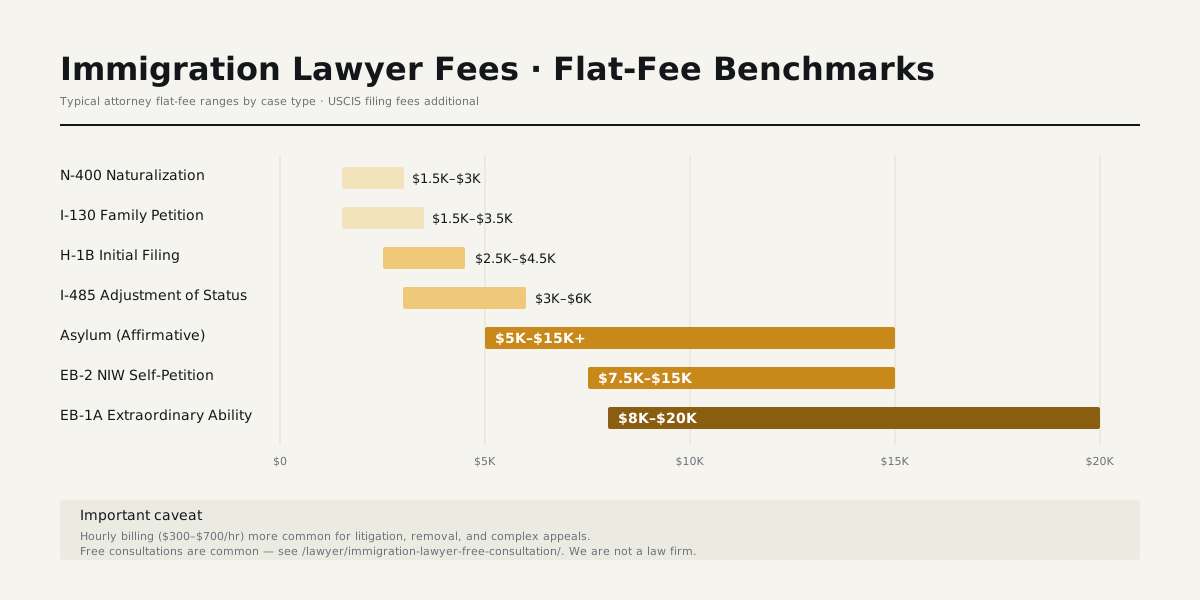
- Costs cluster around case complexity: PERM + I-140 packages, EB-2 NIW filings, asylum representation, and removal-defense cases sit at the higher end; H-1B extensions, I-130 spouse petitions, and naturalization at the lower end.
- How do I know if an immigration attorney is licensed?
- Beyond bar verification, search the EOIR list of recognized organizations and accredited representatives if you are working with a non-profit. Be cautious of 'visa consultants' or 'notarios' who are not licensed attorneys — that practice is unauthorized in most states.
- What questions should I ask before hiring?
- Ask about prior approvals in the specific category you are filing — for free immigration consultation, that means specific case types, not 'years of immigration experience' broadly. Ask for the engagement letter, fee structure, refund policy, communication cadence, and who will actually handle the file.