EB-1 Priority Date: Visa Bulletin Cut-Offs by Country
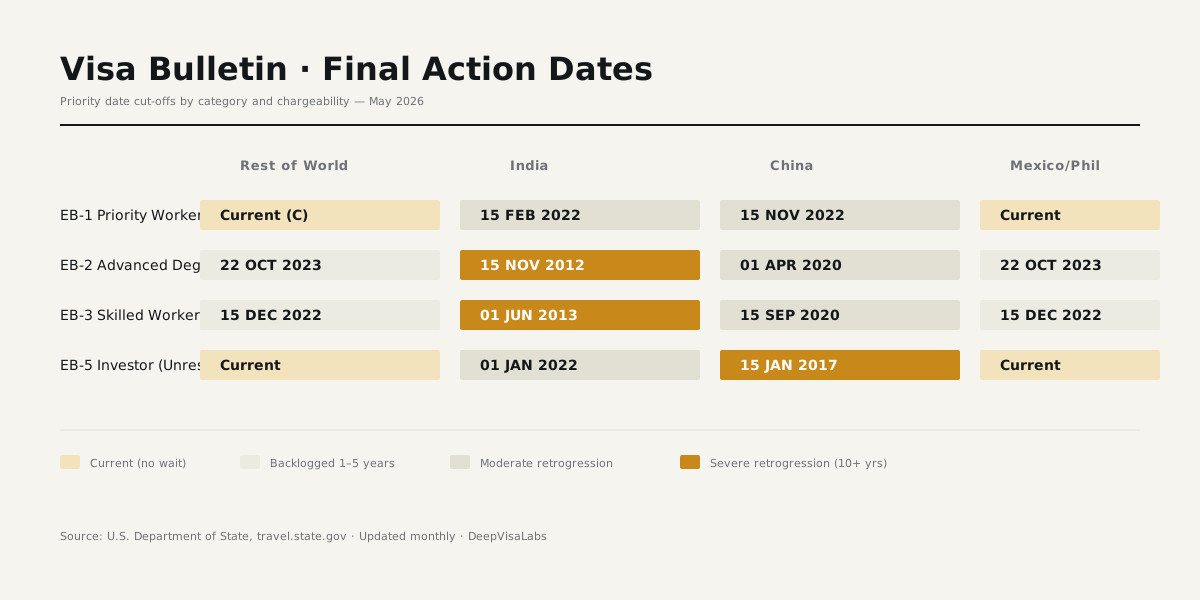
The EB-1 priority date chart entry for All Chargeability Areas reads 'C' — applicants do not need to track a priority date this month because the category has no waiting line.
What EB-1 Priority Date Means
The EB-1 priority date is the date a beneficiary's place in the EB-1 immigrant visa queue. For EB-1A (extraordinary ability), EB-1B (outstanding researcher), and EB-1C (multinational manager), the priority date is the I-140 receipt date — there is no PERM step. The Department of State publishes monthly EB-1 cut-off dates at travel.state.gov; beneficiaries whose priority date is earlier than the cut-off can file I-485 (or be issued a visa).
EB-1 has 28.6% of the worldwide employment-based immigrant visa allocation — approximately 40,000 visas annually under USCIS visa bulletin info. Per-country caps (7% per country) constrain the high-demand countries (India, China) and produce backlogs even in EB-1.
Final Action Dates vs Dates for Filing
The visa bulletin publishes two charts each month. Final Action Dates govern when USCIS or the consulate can issue green cards / immigrant visas — the "approval cut-off." Dates for Filing govern when applicants can file I-485 (or, for consular processing, when the National Visa Center can begin accepting documents) — typically 6–18 months ahead of Final Action Dates.
USCIS publishes a monthly Adjustment of Status Filing Chart on its visa-bulletin page indicating which chart to use for I-485 filing. When USCIS allows "Dates for Filing," the I-485 can be filed earlier even though final adjudication waits for Final Action Dates to advance.
EB-1 China and EB-1 India Backlog
EB-1 China has been retrogressed since 2018. EB-1 India has been retrogressed since 2018 with cut-offs hovering between 2018 and 2022 priority dates. Both countries' EB-1 backlogs reflect demand from employer-sponsored multinational managers (EB-1C) and researchers (EB-1B), plus self-petitioned EB-1A from technology and academic sectors.
EB-1 All Other (the rest of the world) and EB-1 Mexico / Philippines are typically current — meaning beneficiaries from those countries can file I-485 immediately upon I-140 approval. The backlog is concentrated in China and India.
How to Read the EB-1 Row
Each visa-bulletin chart has columns for: All Chargeability Areas Except Those Listed, China-mainland born, El Salvador / Guatemala / Honduras, India, Mexico, and Philippines. The EB-1 row shows the cut-off date for each country. "C" means current — anyone with an approved I-140 can file. A specific date means the cut-off; only beneficiaries with priority dates earlier than the cut-off can file or be issued visas.
"U" means unavailable — no visa numbers are being issued this month, regardless of priority date. "U" is rare for EB-1 but appears occasionally during fiscal year-end allocations or under unusual visa-number circumstances.
Cross-Chargeability for EB-1
Cross-chargeability under INA §202(b)(2) allows a beneficiary to use the spouse's country of birth — useful when one spouse is from a backlogged country (China / India) and the other is from a current country. The cross-chargeability election applies to I-485 / consular processing when both spouses are processing together.
For India-born EB-1 beneficiaries, cross-chargeability through a non-India-born spouse is the most underused acceleration tool. EB-1 India strategy.
Retrogression and I-485 Pending
EB-1 cut-offs can move backward — retrogression. When that happens, USCIS pauses adjudication of pending I-485s for affected beneficiaries. Pending-I-485 status remains valid; EAD and advance parole continue to be renewable. The case waits in queue until the priority date is current again.
Filing I-485 during a current month — even briefly — creates protection against later retrogression. This is why "filing during the window" is the standard advice when EB-1 (or any EB category) is current for a beneficiary's country.
Historical EB-1 Movement
The State Department publishes EB-1 historical data at travel.state.gov visa statistics. EB-1 was current for all countries from 2010–2017. Retrogression for China and India began in 2018; All Other has remained current throughout.
Annual EB-1 visa numbers are around 40,000 worldwide. The 7% per-country cap means India and China are limited to ~2,800 EB-1 visas each per year (without spillover from unused numbers in other categories), but spillover from EB-4 / EB-5 unused numbers can boost EB-1 allocations meaningfully in some years.
Cross-Pillar Reading
- Visa Bulletin · current month overview
- EB-3 Priority Date · sister category
- EB-1 Green Card · category overview and I-140 filing
- EB-1 India · India-specific strategy
- USCIS Processing Times · I-140 / I-485 service-center windows
Bottom line
Current category — no chargeability backlog. File when ready; processing time is the binding constraint, not visa availability.
Frequently asked questions
- What does 'EB-1 priority date' mean in the visa bulletin?
- In the visa bulletin, EB-1 priority date marks the cut-off priority date for the corresponding preference category, applied per chargeability area (country of birth).
- How is the EB-1 priority date cut-off chosen each month?
- Cut-offs move based on rolling demand: when consular and adjustment use leaves room, the date advances; when the category is oversubscribed, the date holds or retrogresses.
- What is the difference between Final Action Dates and Dates for Filing?
- Final Action Dates are the cut-offs at which a visa can actually be issued or an I-485 adjudicated. Dates for Filing are an earlier set of cut-offs USCIS may accept for filing — USCIS posts which chart applies on its 'When to File' page each month.
- Can the EB-1 priority date cut-off go backwards?
- Yes — retrogression happens when the Visa Office over-projects supply or when an existing pool of pending I-485s consumes more numbers than expected. Categories that recently retrogressed include EB-2 and EB-3 for India and China.
- What chargeability area applies to me?
- Your chargeability area is the country where you were born, not your country of citizenship. Spouses can sometimes 'cross-charge' to the other spouse's country if it has a faster line.
Sources
- https://travel.state.gov/content/travel/en/legal/visa-law0/visa-bulletin.html
- https://www.uscis.gov/working-in-the-united-states/permanent-workers/employment-based-immigration-first-preference-eb-1
- https://www.uscis.gov/visabulletininfo
- https://travel.state.gov/content/travel/en/legal/visa-law0/visa-statistics.html
- https://www.uscis.gov/i-140