EB-3 Priority Date: Visa Bulletin Cut-Offs and Downgrade Strategy
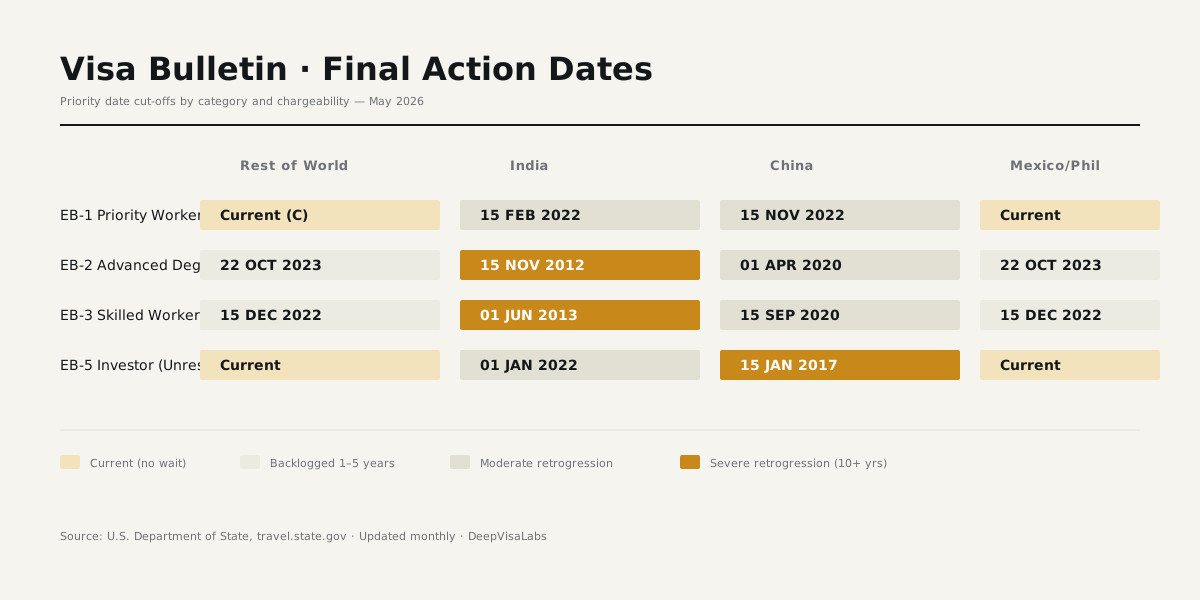
The visa bulletin caps EB-3 priority date at June 1, 2024 for All Chargeability Areas; only earlier priority dates qualify this month.
What EB-3 Priority Date Means
The EB-3 priority date is the date the underlying PERM labor certification was filed (or the I-140 receipt date if no PERM was required). EB-3 covers Skilled Workers (positions requiring 2+ years of training or experience), Professionals (US bachelor's degree minimum), and Other Workers (less than 2 years of training).
EB-3 has 28.6% of worldwide employment-based immigrant visa allocation, the same as EB-2. The Department of State publishes monthly EB-3 cut-off dates at travel.state.gov.
Three EB-3 Sub-Categories
Skilled Worker: position requires at least 2 years of training, education, or experience. The I-140 must demonstrate the position's bona fide requirement and the beneficiary's qualifications.
Professional: position requires a US bachelor's degree (or foreign equivalent) — distinct from skilled worker by the formal degree requirement. Professional EB-3 typically tracks the same priority-date cut-offs as skilled worker.
Other Worker (EW): positions requiring less than 2 years of training. Limited to 10,000 visas annually under USCIS Third Preference EB-3 page. Cut-offs are typically much further behind than EB-3 Skilled Worker / Professional, often by 5+ years.
EB-3 Country Charts
Visa-bulletin charts split by country of chargeability: All Chargeability Areas Except Those Listed, China-mainland born, El Salvador / Guatemala / Honduras, India, Mexico, and Philippines. EB-3 backlogs are concentrated in India, Philippines, and (to a lesser extent) China and Mexico.
EB-3 India has been the most heavily backlogged EB category since 2008, with cut-offs occasionally as far back as 2008–2012. EB-3 Philippines has historically been backlogged due to high demand from healthcare worker filings. EB-3 China runs less backlogged than EB-3 India in most years.
EB-2 to EB-3 Downgrade Strategy
For India-born beneficiaries, EB-2 has historically been more backlogged than EB-3 — counterintuitively, because EB-2 absorbs heavy demand from STEM-degreed beneficiaries while EB-3 demand has been more moderate. During 2020–2024, EB-3 India moved ahead of EB-2 India for extended periods.
The downgrade strategy: file a second I-140 in EB-3 using the same approved PERM as the EB-2 filing. The beneficiary's degree and experience must support EB-3 (which is easier than EB-2 — bachelor's degree minimum). The original priority date is retained under 8 CFR §204.5(e). When EB-3 cut-off advances past the priority date, the beneficiary can file I-485 under the EB-3 I-140 — even while the EB-2 I-140 is still approved and pending.
Final Action Dates vs Dates for Filing
Both charts apply to EB-3. USCIS publishes a monthly Adjustment of Status Filing Chart specifying which chart governs I-485 filings. When "Dates for Filing" is allowed, beneficiaries can file I-485 earlier than Final Action Dates — unlocking concurrent I-765 (EAD) and I-131 (Advance Parole) filings.
For consular processing, the National Visa Center begins case preparation at "Dates for Filing" and the actual visa issuance follows "Final Action Dates."
Other Worker (EW) Sub-Cap
The Other Worker sub-category has a 10,000-visa annual sub-cap that is shared across all countries. EW cut-offs are typically further behind than EB-3 Skilled / Professional cut-offs by years. EW filings are uncommon — most positions qualify for at least Skilled Worker status, and employers prefer the longer queue position of the Skilled Worker sub-category.
EW cut-offs are listed separately on the EB-3 row. India EW is often unavailable ("U") for extended periods; All Other EW typically tracks EB-3 Skilled / Professional with a moderate lag.
EB-3 to EB-2 Upgrade
Beneficiaries can upgrade from EB-3 to EB-2 with a new I-140 if they qualify for EB-2 (master's degree or bachelor's + 5 years progressive experience). The original priority date is retained under 8 CFR §204.5(e). When EB-2 is more current than EB-3 for the beneficiary's country, the upgrade can shave years off the timeline.
The upgrade requires a new PERM filing in EB-2 — the original EB-3 PERM cannot be used as-is (since EB-2 has stricter educational / experience requirements). Many India-born beneficiaries pursue EB-2 PERM in parallel with their EB-3 case to preserve optionality on which I-140 to use for I-485.
Cross-Pillar Reading
- Visa Bulletin · current month overview
- EB-1 Priority Date · sister category
- EB-3 Green Card · category overview and I-140 filing
- EB-2 Priority Date · upgrade-from-EB-3 strategy
- H-1B to Green Card · full PERM-to-485 walkthrough
Bottom line
Status: backlogged. The cut-off is June 1, 2024; later priority dates are queued and total wait time stacks queue + adjudication.
Frequently asked questions
- Is the EB-3 priority date bulletin position legal advice?
- Reading the bulletin and matching your priority date is fact-finding, not legal interpretation. For decisions about filing strategy, premium processing, or treaty alternatives, talk to a licensed immigration attorney.
- What does 'EB-3 priority date' mean in the visa bulletin?
- In the visa bulletin, EB-3 priority date marks the cut-off priority date for the corresponding preference category, applied per chargeability area (country of birth).
- How is the EB-3 priority date cut-off chosen each month?
- Cut-offs move based on rolling demand: when consular and adjustment use leaves room, the date advances; when the category is oversubscribed, the date holds or retrogresses.
- What is the difference between Final Action Dates and Dates for Filing?
- Final Action governs adjudication; Dates for Filing govern when USCIS will accept the I-485 paperwork into the queue. Always check the USCIS 'When to File' page to see which chart applies that month.
- Can the EB-3 priority date cut-off go backwards?
- Yes; retrogression is a regular feature, not an anomaly. The cut-off can move backward by months or even years when demand outpaces the statutory cap.
Sources
- https://travel.state.gov/content/travel/en/legal/visa-law0/visa-bulletin.html
- https://www.uscis.gov/working-in-the-united-states/permanent-workers/employment-based-immigration-third-preference-eb-3
- https://www.uscis.gov/visabulletininfo
- https://travel.state.gov/content/travel/en/legal/visa-law0/visa-statistics.html
- https://www.uscis.gov/i-140