Harrisburg University of Science and Technology Day 1 CPT: STEM Programs and Risk Profile
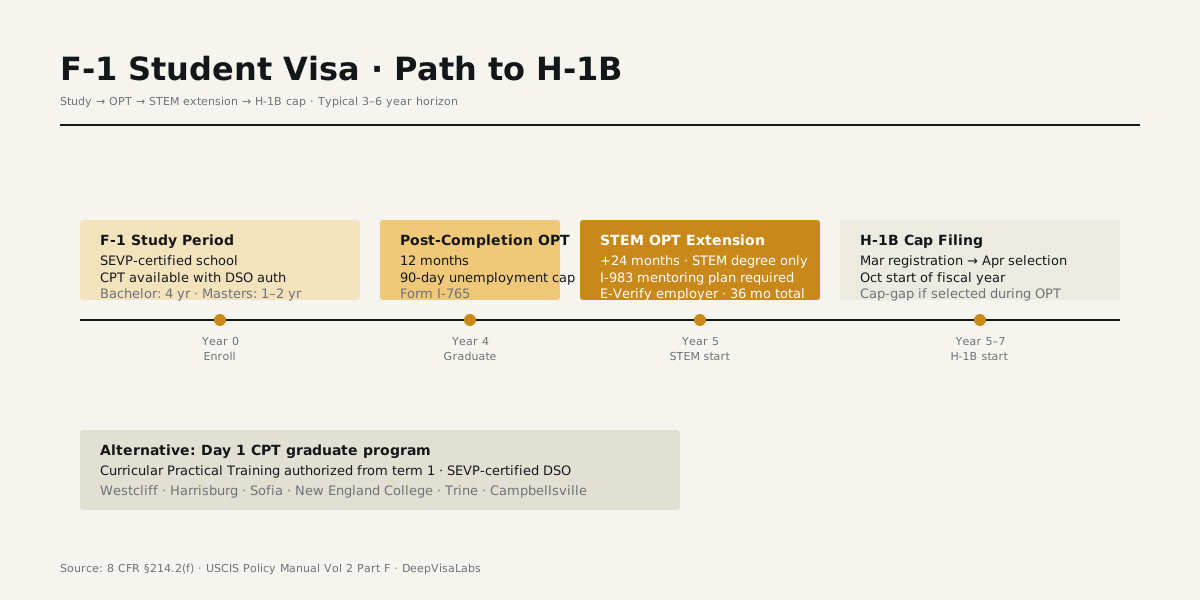
Day 1 CPT is allowed by the DSO when curriculum requires off-campus practical training from term one. The risk is downstream: USCIS treats heavy Day 1 CPT use as evidence the student maintained F-1 status only as a work-authorization vehicle, which can damage future visa adjudications.
Harrisburg University at a Glance
- Location: Harrisburg, PA (with Philadelphia and remote-instruction extensions).
- Accreditation: Middle States Commission on Higher Education (MSCHE) — regional accreditation.
- SEVP certification: yes — verify current status on Study in the States.
- Programs: MS in Analytics, MS in Project Management, MS in Information Systems Engineering and Management, MS in Computer Information Sciences, MS in Healthcare Informatics, MS in Biotechnology, MS in Learning Technologies, several DBA / DSc doctoral programs.
- Approximate annual tuition (graduate): $20,000-$30,000 USD per year.
Harrisburg is positioned as a STEM-designated graduate institution; most master's programs are STEM-eligible for STEM OPT extension purposes (CIP-code mapped). The STEM-OPT designation is a key differentiator from non-STEM Day 1 CPT options.
How CPT Is Structured at Harrisburg
Harrisburg's graduate programs include "Experiential Learning Practicum" (or analogous course names per program) that requires CPT-authorized employment from term one. Students enroll in the practicum as a credit-bearing course alongside other coursework.
- Class schedule: weekend-intensive cohort model in many programs — courses meet Saturdays and select weekday evenings.
- Practicum integration: students submit reflective journals and supervisor evaluations linked to course outcomes.
- Program length: most master's programs run 18-24 months full-time.
- STEM designation: most master's programs are coded as STEM, qualifying graduates for the 24-month STEM OPT extension after program completion (subject to E-Verify employer requirement).
USCIS Scrutiny Pattern for Harrisburg Alumni
Specialty-Occupation Strength on H-1B
Harrisburg's STEM-designated master's degrees support specialty-occupation arguments for H-1B roles in data analytics, software engineering, project management, and healthcare informatics. The CIP-to-SOC mapping is straightforward for these roles.
F-1 Maintenance Documentation
RFEs request weekly course attendance records and practicum evaluations. Harrisburg's structured weekend-cohort model produces consistent documentation that responds well to RFEs — provided the student maintained regular attendance.
Adjustment-of-Status Concerns
For I-485 cases, USCIS may scrutinize the F-1 maintenance pattern more deeply, including whether the practicum hours genuinely tracked academic learning. Strong I-485 outcomes correlate with rigorous in-class participation and clean academic records.
Risk Profile and Decision Framework
- Pros: MSCHE regional accreditation, STEM-designated programs unlocking 24-month STEM OPT, structured practicum integration, established SEVP standing.
- Cons: weekend-intensive scheduling draws scrutiny if it appears the F-1 was held primarily for work authorization, premium tuition.
- Best fit: candidates targeting H-1B in STEM occupations (data analytics, software engineering, healthcare informatics) who want both Day 1 CPT and STEM OPT runway.
- Worst fit: candidates pursuing non-STEM career paths who can't articulate specialty-occupation alignment.
Comparison to Other Day 1 CPT Programs
- Harrisburg vs Westcliff — Harrisburg's STEM concentration is broader; Westcliff blends business and IT.
- Harrisburg vs Sofia University — Sofia is California-based and more specialized in MSCS; Harrisburg offers a wider STEM program portfolio.
- Harrisburg vs New England College — both regionally accredited; Harrisburg has stronger STEM positioning.
Bottom line
Day 1 CPT is regulatorily permitted but operationally fragile. The legal basis exists in 8 CFR §214.2(f)(10)(i); the practical risk is downstream USCIS scrutiny on every later filing. Use deliberately, with counsel, not as default.
Frequently asked questions
- Can I switch from a regular F-1 program to Day 1 CPT?
- Yes, but the transfer is treated as a new SEVIS record. The new program's curriculum must legitimately require Day 1 CPT, and you must complete the full new program — you can't just transfer to extend work authorization.
- Does Day 1 CPT reset OPT eligibility?
- OPT eligibility ties to degree level. A second master's at the same level usually does not unlock new OPT. Day 1 CPT timing during the program does not reset OPT, but it changes the F-1 use pattern USCIS evaluates.
- Can H-1B be sponsored while on Day 1 CPT?
- H-1B sponsorship is procedurally available to Day 1 CPT students; the F-1 underlying status is what enables the cap registration. Employers should be ready for RFEs around F-1 maintenance, transcript review, and curriculum justification.
- What happens if SEVP audits the Day 1 CPT school?
- SEVP can revoke a school's certification or place restrictions on CPT issuance. Past SEVP enforcement actions against suspect Day 1 CPT operators have included program closure, terminating active student SEVIS records, and referral to ICE.
- Is Day 1 CPT a safe alternative to H-1B?
- Day 1 CPT is not equivalent to H-1B. The status is fragile, the school list shifts, USCIS pre-decision scrutiny is elevated, and downstream filings (H-1B, I-140, I-485) carry RFE risk. Counsel before using it as a multi-year plan.