Sofia University Day 1 CPT: MSCS, Business Analytics, and SEVP Status
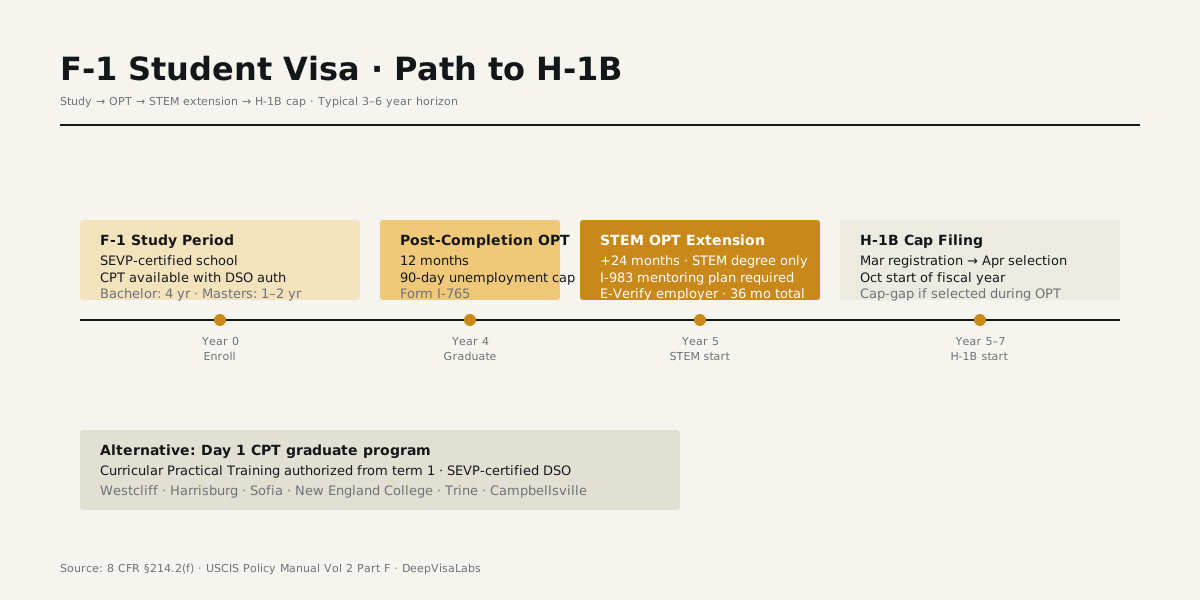
'Day 1 CPT' programs let F-1 students start CPT-authorized employment at the start of their program rather than the standard one-academic-year wait. The legal basis exists in SEVP regulation, but USCIS routinely RFEs H-1B and I-485 cases where Day 1 CPT was used for the bulk of a degree.
Sofia University at a Glance
- Location: Palo Alto, CA.
- Accreditation: WASC Senior College and University Commission (WSCUC) — regional accreditation.
- SEVP certification: yes — verify current status on Study in the States.
- Programs: MS in Computer Science, MBA, MS in Business Analytics, several MS / PhD in Psychology and Transpersonal Psychology programs (the latter is the historical core of the institution).
- Approximate annual tuition (graduate): $18,000-$28,000 USD.
Sofia's MSCS and MBA programs are the H-1B / Day 1 CPT-relevant offerings. The institution's longer history is in transpersonal psychology, which positioned it differently from purely vocational Day 1 CPT operators when WSCUC granted regional accreditation.
How CPT Is Structured at Sofia
Sofia's MSCS and MBA programs include curriculum-integrated CPT requirements: students complete an "Industrial Practicum" or equivalent as a credit-bearing component running concurrently with academic coursework. CPT is authorized by the DSO from term one for students whose program of study requires it.
- Class schedule: hybrid model — some in-person sessions in Palo Alto, some scheduled-online and asynchronous components.
- Practicum integration: students submit periodic deliverables tying off-campus work to course objectives.
- Program length: MSCS and MBA typically 18-24 months full-time.
- Cohort size: smaller than Harrisburg or Westcliff, which has implications for class scheduling and individual attention.
USCIS Scrutiny Pattern for Sofia Alumni
F-1 Maintenance and Class Attendance
RFEs targeting Sofia alumni typically request transcripts, class-attendance records, and practicum evaluations. Sofia's smaller cohort sizes can produce stronger individualized documentation but also less standardized RFE response packages than larger programs.
MSCS Specialty-Occupation Strength
MSCS graduates target software-engineering and data-related H-1B positions where the specialty-occupation argument is well-supported. Sofia's WSCUC accreditation supports the credential-evaluation step that some H-1B specialty-occupation challenges hinge on.
SEVP Audit History
Sofia has navigated SEVP scrutiny in the past — like most Day 1 CPT operators — and currently holds active certification. Verify the current SEVP status before enrolling: any school's certification can be revisited and the timeline for status loss is short.
Risk Profile and Decision Framework
- Pros: WSCUC regional accreditation, Palo Alto location (proximity to tech employers), MSCS specialty-occupation alignment, smaller cohort with individualized attention.
- Cons: smaller scale means fewer alumni-network signals for downstream USCIS adjudication, hybrid scheduling pattern still draws scrutiny, premium California cost-of-living adds to total program expense.
- Best fit: MSCS candidates targeting Bay Area software-engineering or data-science H-1B roles who can document regular in-person class attendance.
- Worst fit: candidates pursuing non-technical roles where the MSCS specialty-occupation alignment is weak, or candidates relying on online-heavy attendance.
Comparison to Other Day 1 CPT Programs
- Sofia vs Westcliff — both California, both WSCUC. Westcliff's program portfolio is broader; Sofia is more specialized in MSCS.
- Sofia vs Harrisburg — Harrisburg's STEM-designated programs are broader; Sofia's MSCS is narrower.
- Sofia vs New England College — different geographic regions; New England College has fewer technical programs.
Bottom line
Bottom line: the regulatory authority is real, the school risk and USCIS scrutiny risk are also real. Before enrolling, run the cost/benefit including legal-fee and adjudication-risk discount on every future visa filing.
Frequently asked questions
- What happens if SEVP audits the Day 1 CPT school?
- If SEVP suspends the school's certification, current students on Day 1 CPT may lose status. The 2018-2019 actions against University of Farmington (a sting operation) illustrate the worst-case downside — student SEVIS terminations and ICE encounters.
- Is Day 1 CPT a safe alternative to H-1B?
- It is an alternative but not a 'safe' one. Practical-training authorization requires genuine curriculum integration and the use pattern matters at later USCIS adjudications. Treat it as a stop-gap, not a multi-year strategy without legal advice.
- Is Day 1 CPT legal?
- Day 1 CPT is regulatorily permissible under 8 CFR §214.2(f)(10)(i) when the school's curriculum requires it from term one. Whether USCIS later accepts that the student maintained F-1 status during heavy Day 1 CPT use is a separate, downstream question.
- Why do USCIS officers scrutinize Day 1 CPT use?
- The pattern that draws scrutiny: full-time CPT employment (40 hours/week) for the duration of a graduate program at a university with weekend or online-only classes. USCIS reads this as F-1 misuse and may issue NTAs in extreme cases.
- Which universities offer Day 1 CPT programs?
- Day 1 CPT schools are typically smaller graduate-only or graduate-heavy institutions: Westcliff, Harrisburg, Sofia, New England College, Trine, Campbellsville, CIAM. Each has its own curriculum structure and CPT integration model — and each carries its own SEVP audit risk profile.