Westcliff University Day 1 CPT: Programs, SEVP Status, USCIS Scrutiny Pattern
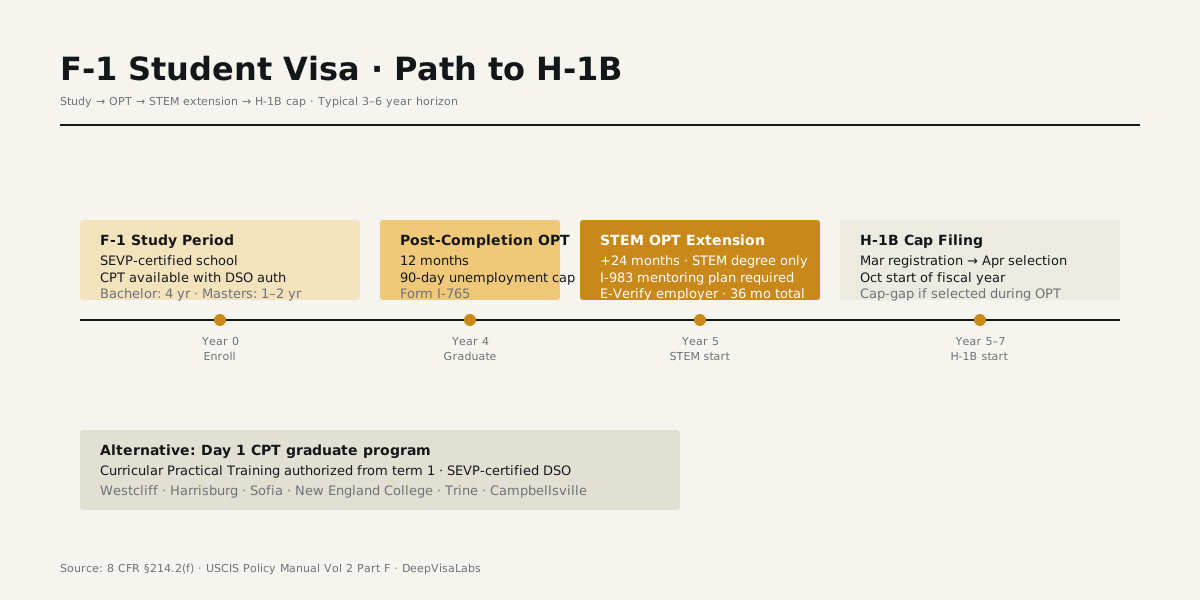
Day 1 CPT means CPT authorization issued by the DSO from the start of the F-1 program (versus the standard 1-academic-year wait). It's a regulatory option, not a USCIS-blessed pathway — most large universities reject it; a smaller cohort of universities operate Day 1 CPT programs with proper curriculum integration.
Westcliff University at a Glance
- Locations: Irvine and Anaheim, CA (additional remote-instruction options).
- Accreditation: WASC Senior College and University Commission (WSCUC) — regional accreditation.
- SEVP certification: yes — verify current status on Study in the States.
- Programs: MBA, Master of Science in Computer Science (MSCS), Master of Science in Information Technology (MSIT), Master of Arts in TESOL, Doctor of Business Administration (DBA), Doctor of Education (EdD).
- Approximate annual tuition (graduate): $13,000-$22,000 USD per year, varies by program.
Westcliff is one of the most-searched Day 1 CPT institutions, partly because its program portfolio aligns with H-1B-target STEM occupations (MSCS, MSIT, MBA-IT concentrations) and partly because its CPT integration is structured rather than ad-hoc.
How CPT Is Structured at Westcliff
Westcliff's graduate programs include a mandatory practical-training component woven into the curriculum: students complete CPT-authorized employment alongside coursework, with reflective assignments tying the work to course objectives. The DSO authorizes CPT effective from term one when the student's program of study requires it from the beginning.
Important details for evaluating fit:
- Class schedule: hybrid model — some classes meet on weekday evenings, some on weekends, some are scheduled for asynchronous online completion. The mix varies by program and term.
- CPT documentation: students submit reflection assignments and supervisor evaluations tied to coursework. Westcliff maintains documentation files that USCIS may request at later adjudication.
- Program length: most master's programs run 16-20 months full-time.
- Credit-hour structure: aligns with WSCUC and SEVP requirements for full-time enrollment.
USCIS Scrutiny Pattern for Westcliff Alumni
Anecdotally, USCIS H-1B and I-485 RFEs targeting Westcliff alumni cluster around three issues:
F-1 Maintenance Documentation
RFEs request transcripts, course schedules, and evidence the student attended classes consistently. Westcliff alumni who maintained regular attendance and have clean academic records typically respond well to these RFEs; those with irregular attendance or large gaps face higher denial risk.
Curriculum Integration of CPT
RFEs request the syllabus showing how CPT integrates with course objectives. Westcliff's curriculum-integrated documentation supports a stronger response than schools where CPT is structurally bolted on.
Specialty-Occupation Standard at H-1B
For H-1B petitions, USCIS may challenge whether the Westcliff degree provides the "specific specialty" required for the H-1B role. STEM-titled MSCS and MSIT degrees usually clear this hurdle for software-development and data-analyst H-1B roles; MBA degrees attached to general-management H-1B roles face more variable outcomes.
Comparison to Other Day 1 CPT Programs
- Westcliff vs Harrisburg University — both regionally accredited, both offer STEM-designated degrees. Harrisburg's programs are more concentrated in pure STEM (computer science, biotech) while Westcliff blends business and IT.
- Westcliff vs Sofia University — both California, both WSCUC-accredited. Sofia's MSCS is narrower and more specialized; Westcliff's program portfolio is broader.
- Westcliff vs New England College — different accreditation regions; New England College's MSIT and MBA are similar in design but smaller cohorts.
Risk Profile and Decision Framework
Westcliff sits in the moderate-risk Day 1 CPT tier per USCIS adjudication patterns:
- Pros: regional WSCUC accreditation, established SEVP standing, structured curriculum integration, broad program portfolio, documented alumni H-1B selection history.
- Cons: hybrid evening / weekend schedule draws scrutiny, MBA-attached H-1B has variable specialty-occupation outcomes, premium tuition compared to public-university alternatives.
- Best fit: STEM-track candidates (MSCS, MSIT) using Day 1 CPT as 1-2 semester bridge after H-1B lottery non-selection, who can document regular class attendance.
- Worst fit: MBA candidates relying on Day 1 CPT for 4+ semesters in non-specialty roles, with online-only attendance pattern.
Bottom line
Day 1 CPT is regulatorily permitted but operationally fragile. The legal basis exists in 8 CFR §214.2(f)(10)(i); the practical risk is downstream USCIS scrutiny on every later filing. Use deliberately, with counsel, not as default.
Frequently asked questions
- Why do USCIS officers scrutinize Day 1 CPT use?
- The pattern that draws scrutiny: full-time CPT employment (40 hours/week) for the duration of a graduate program at a university with weekend or online-only classes. USCIS reads this as F-1 misuse and may issue NTAs in extreme cases.
- Which universities offer Day 1 CPT programs?
- Day 1 CPT schools are typically smaller graduate-only or graduate-heavy institutions: Westcliff, Harrisburg, Sofia, New England College, Trine, Campbellsville, CIAM. Each has its own curriculum structure and CPT integration model — and each carries its own SEVP audit risk profile.
- Can I switch from a regular F-1 program to Day 1 CPT?
- F-1 transfer to a Day 1 CPT program is a regular SEVIS school transfer. The risk: USCIS may later view the transfer as a status-of-convenience move, especially if it follows H-1B lottery non-selection.
- Does Day 1 CPT reset OPT eligibility?
- Day 1 CPT during a master's program does not eliminate post-completion OPT eligibility — but heavy CPT use can reduce the perceived 'study' content USCIS expects. Some students have had OPT EAD denied due to CPT-heavy programs.
- Can H-1B be sponsored while on Day 1 CPT?
- Yes — employers regularly file H-1B for Day 1 CPT students during the cap registration window, since the F-1 status itself is intact. The risk is RFE rate: H-1B cases for Day 1 CPT students see materially more requests for evidence on F-1 status maintenance.