F-1 to H-1B: OPT Bridge, March Cap Lottery, Cap-Gap, October 1 Start
The standard F-1 → H-1B path: post-completion OPT (12 months, +24 STEM) → employer sponsors H-1B cap registration in March → if selected, employer files I-129 in April → change of status approved with October 1 H-1B start. Cap-gap bridges OPT expiration through October 1.
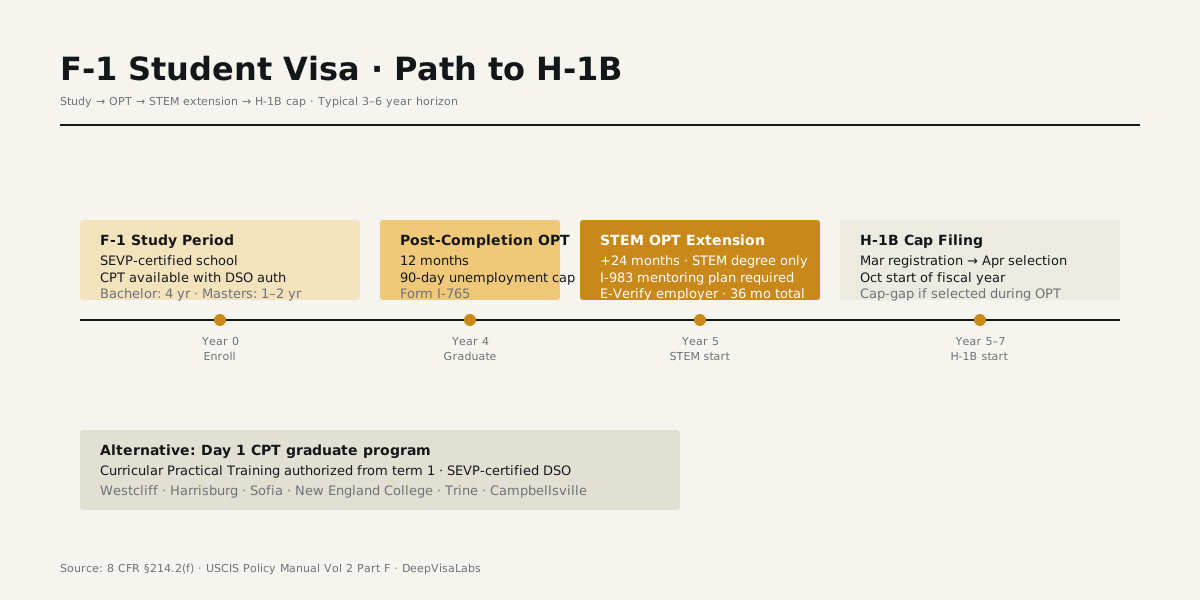
The Standard F-1 to H-1B Path
The reliable path from F-1 student to H-1B specialty occupation runs through post-completion OPT. The chain looks like this:
- Graduate from a US degree program. Bachelor's, master's, or doctorate from a SEVP-certified institution.
- File post-completion OPT. 90-day pre-completion to 60-day post-completion window. Form I-765 with category (c)(3)(B). 12 months of work authorization.
- If STEM-eligible, file STEM OPT extension. 24 additional months of work authorization. E-Verify employer + I-983 required.
- Find an employer willing to sponsor cap-subject H-1B. The single biggest gating factor — many employers don't sponsor.
- Employer registers in March cap lottery. Electronic registration on USCIS.gov; $215 registration fee per beneficiary (2024+ fee-rule).
- If selected, employer files I-129 in April-June. Filed with the certified LCA, ACWIA training fee, anti-fraud fee, asylum-program fee, and base I-129 fee.
- USCIS adjudicates change of status. Approval shifts F-1 to H-1B status effective October 1.
- Cap-gap automatic extension bridges OPT EAD expiration to October 1 if the OPT would otherwise lapse.
This path works most reliably for STEM students who can use the 36-month OPT + STEM runway to participate in 2-3 H-1B cap lotteries.
Cap Registration Math: The Lottery Numbers
The H-1B cap is statutorily 65,000 (regular cap) plus 20,000 (US-master's-or-higher exemption) per fiscal year. Recent registration counts have substantially exceeded these caps:
- FY2024: ~780,000 registrations submitted, ~110,000 selections — selection rate ~14%.
- FY2025: ~470,000 registrations after USCIS implemented the 2024 beneficiary-centric rule — selection rate ~25%.
- FY2026 (registrations submitted March 2025): final published numbers vary; the beneficiary-centric rule produced more reasonable single-registration-per-beneficiary patterns.
Master's-degree-holders compete in two lotteries: the 65,000 regular cap first, then any unselected master's-degree holders compete in the 20,000 master's lottery. Selection probability is higher for US-master's holders than US-bachelor's holders, all else equal.
The 2024 Beneficiary-Centric Rule
USCIS implemented a beneficiary-centric registration rule starting with FY2025 selections. Each beneficiary is entered in the lottery only once regardless of how many employers register them. This eliminated the prior pattern where multiple employer registrations multiplied a single beneficiary's selection probability — a tactic that disadvantaged students with only one sponsoring employer.
Practical effect: students with one strong sponsorship offer now compete on equal footing with students who had multiple registrations. The selection rate for cap-subject registrations rose from ~14% (FY2024) to ~25% (FY2025).
Cap-Gap Automatic Extension — How It Bridges
The cap-gap extension automatically extends F-1 status and any current OPT employment authorization through September 30 (or until the H-1B petition is approved or denied) for F-1 students with timely-filed cap-subject H-1B petitions. It applies when:
- The H-1B petition is filed before the F-1 student's current authorized period of stay or OPT EAD expires.
- The H-1B petition requests change of status (not consular processing).
- The H-1B has an effective date of October 1 of the current fiscal year.
If the H-1B is denied, withdrawn, or revoked before October 1, cap-gap extension immediately ends and the student must depart the US within the standard 60-day grace period. If approved, cap-gap bridges seamlessly to the October 1 H-1B start date.
Alternative Paths When Cap Lottery Fails
Selection rates around 25% mean ~75% of cap registrations don't translate to H-1B selection. Alternative paths for unselected F-1 students:
Multi-Year Runway via STEM OPT + Multiple Lotteries
STEM students have 36 months of OPT runway, allowing 2-3 H-1B cap lottery cycles. Cumulative selection probability over 3 cycles approaches 60-70%, which is much better than any single cycle.
Cap-Exempt H-1B
Cap-exempt H-1B (universities, nonprofit research organizations, government research) skips the lottery entirely. See cap-exempt H-1B details. Concurrent cap-exempt + cap-subject filing is also possible.
Day 1 CPT Bridge
Some unselected students transition to a Day 1 CPT graduate program to maintain F-1 status and work authorization through the next cap cycle. See Day 1 CPT schools for the risk-and-fit framework.
L-1 via Employer Affiliate Abroad
For students whose employer has a qualifying foreign affiliate, the student can work abroad for 1+ year then transfer back via L-1. This bypasses the H-1B cap.
O-1 for Documented Achievers
O-1 (extraordinary ability) has no annual cap and can be filed any time. Higher evidentiary bar; works best for graduates with publications, awards, or significant achievements in their field.
EB-2 NIW Self-Petition
Students with significant research or entrepreneurial accomplishments can self-petition for EB-2 NIW, which bypasses the H-1B requirement for green-card progress. See EB-2 NIW.
Common Failure Modes
- Employer hesitation: many US employers don't sponsor cap-subject H-1B due to filing-fee burden ($5,000-$8,000+) and uncertainty. Larger tech, consulting, and healthcare employers are the most reliable sponsors.
- OPT EAD timing miss: late OPT filings or rejections can leave the student without work authorization in the months before the cap lottery.
- F-1 maintenance issues: gaps in employment beyond 90 days during OPT trigger SEVIS termination and end F-1 status, blocking cap-gap.
- Specialty-occupation challenges: H-1B petitions where the role doesn't clearly require a specific specialty degree face RFE and denial. Employers with strong specialty-occupation track records reduce this risk.
- I-129 RFE on F-1 maintenance: USCIS may RFE evidence of continuous F-1 status during OPT — pay stubs, employer letters, SEVIS records.
Bottom line
F-1 to H-1B transitions reliably for STEM students using the OPT (12) + STEM (24) runway to bridge 2-3 H-1B cap lotteries. The decisive factor is finding an employer willing and able to sponsor cap-subject H-1B in March of an OPT year — not the regulatory mechanics, which are well-established.
Frequently asked questions
- What happens if I'm unemployed during OPT?
- OPT allows 90 cumulative days of unemployment over the 12-month period. STEM OPT allows 60 additional days (150 cumulative including OPT period). Exceeding the limit triggers SEVIS termination — F-1 status ends; DHS can issue NTA.
- Can I change employers during OPT?
- OPT permits unlimited employer changes. The EAD card is yours; employers verify via Form I-9. Update SEVIS through your DSO when you start or end employment — this is mandatory within 10 days, and missing reports can affect status.
- Are F-1 students subject to FICA on OPT/CPT wages?
- F-1 OPT and CPT wages are FICA-exempt while the student is a non-resident alien. The exemption lasts up to 5 calendar years for most F-1 students. After becoming a tax resident, FICA applies on subsequent wages.
- Can I travel internationally on OPT or CPT?
- International travel during OPT or CPT requires: valid F-1 visa, passport, EAD or I-20 endorsement, and supporting employment evidence. DSO travel signature on I-20 within 6 months is critical. Without an active employment status, re-entry can be challenged.
Sources
- https://www.uscis.gov/working-in-the-united-states/h-1b-specialty-occupations
- https://www.uscis.gov/i-129
- https://www.uscis.gov/working-in-the-united-states/students-and-exchange-visitors/optional-practical-training-extension-for-stem-students-stem-opt
- https://studyinthestates.dhs.gov/sevis-help-hub
- https://www.uscis.gov/working-in-the-united-states/h-1b-specialty-occupations/cap-gap-extension-for-f-1-students-with-approved-h-1b-petitions